
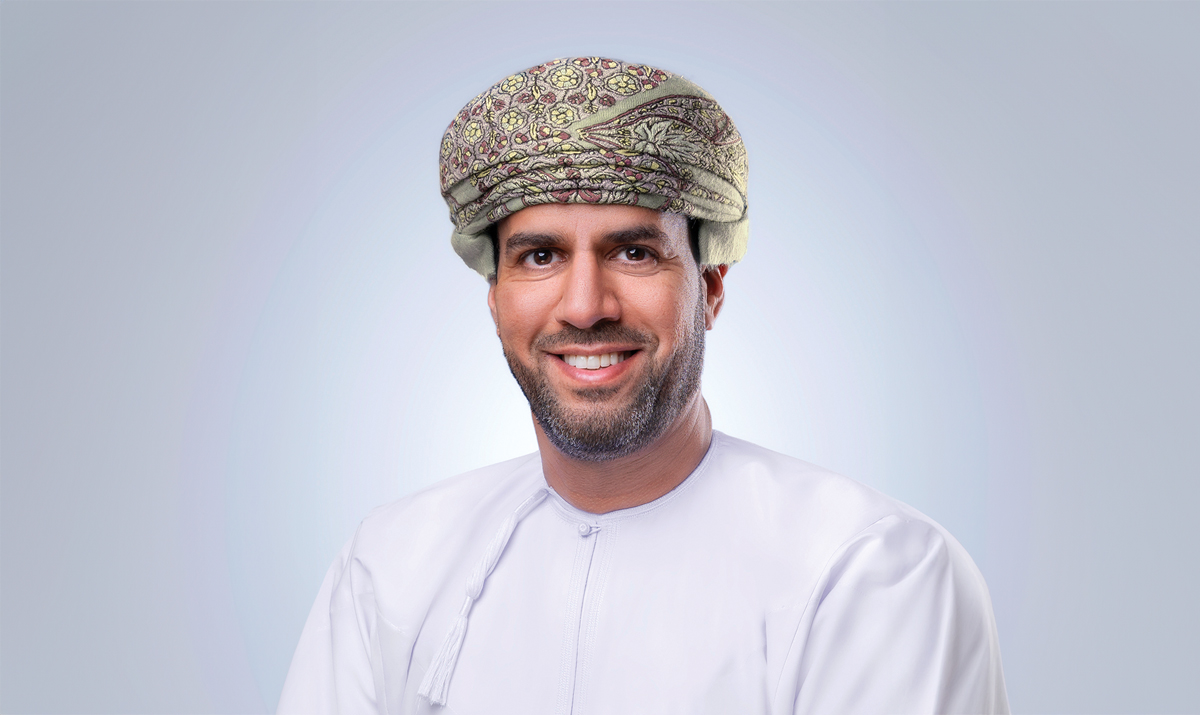
12 Feb Interview With Said Al Mandhari, CEO of ITHCA Group, Oman
Oman’s information and communications technologies sector is projected to exceed $9 billion in revenues by 2029, and the government aims to raise the sector’s gross domestic product contribution to 10% by 2040. Could you highlight what makes Oman a competitive ICT and digital hub, and how it stands out from other regional markets?
Oman has three key competitive advantages that make it attractive for ICT investment. First is human capital. Oman has a strong pool of skilled graduates and young professionals — both men and women — who are passionate about technology. We continue to see strong interest in ICT-related fields, and this talent remains one of our greatest assets. Second is location. Oman’s strategic position connects Asia with the Gulf region. From a telecommunications and logistics perspective, the country serves as a vital gateway, making it ideal for both technology and logistics operations, which increasingly go hand in hand. Third is governance and leadership support. The government recognizes ICT as a key enabler for all sectors of the economy, not just a standalone industry. Strong leadership commitment and investment incentives have created a favorable environment for foreign investors. Together, these factors — skilled talent, strategic location and government support — form the foundation of Oman’s growing ICT ecosystem.
How have Oman’s funding pathways for innovative ICT companies evolved in recent years and what role does ITHCA play in the country’s tech innovation ecosystem?
ITHCA was established in 2019 with a clear mandate from the Oman Investment Authority (OIA) to serve as its strategic investment arm in the ICT sector. From the beginning, we identified a gap in early-stage investments in Oman. To address this, ITHCA has so far invested in five venture capital (VC) funds to support startups and help entrepreneurs scale their businesses. Once these startups mature, we often invest directly in their growth stage to help them expand beyond Oman. We also make direct investments in established companies or form joint ventures with international partners to grow their operations from Oman to regional markets. Today, Oman’s investment ecosystem is strong and increasingly attractive to both local and international startups. In addition to ITHCA, initiatives such as the Oman Future Fund and Oman Investment Fund provide further support for large-scale and strategic projects, strengthening the startup ecosystem.
Can you expand on ITHCA’s achievements in developing Oman’s digital economy. How does it align with the Oman Vision 2040 strategy in this regard?
Our two main objectives are creating jobs for young people and increasing the ICT sector’s contribution to Oman’s GDP. Since 2019, we have focused on building a strong investment ecosystem, structured around three types of investments: VC funds to strengthen early-stage investments and create healthy competition among funds; direct investments in startups and local companies to help them scale beyond Oman; and joint ventures with international companies either to establish operations in Oman or to support their regional growth. Through this approach, ITHCA has become a key destination for investors, offering multiple pathways for growth, whether early-stage or mature, while driving job creation and boosting the sector’s impact on the national economy.
Oman’s capacities in data centers and international subsea fiber optic cables are set to continue rising quickly. What major steps is ITHCA taking to build the sultanate’s data industries?
Oman already has several initiatives led by key operators like Omantel and Ooredoo, which have invested heavily in submarine cables and data centers serving both local and international markets. ITHCA’s role is to build the ecosystem around these data hubs, expanding beyond connectivity to include high-performance computing, artificial intelligence (AI) infrastructure, applications and regional terrestrial links, especially with Saudi Arabia and the United Arab Emirates. We focus on creating synergy among existing projects and driving new initiatives to meet future demand. This includes attracting international data center investments and collaborating on new submarine cable projects, both with local operators and global investors. With Oman’s strategic location and strong infrastructure, the country is well-positioned to become a regional data hub and entry point for the Gulf, Asia and East Africa.
Small and medium-sized enterprises are considered central to Oman’s digital transformation. How is ITHCA diversifying Oman’s tech ecosystem by investing in emerging technologies and future-facing startups?
Since our establishment, we have seen that SMEs need two types of support. First is funding, which we provide through VC funds or direct growth-stage investments. Equally important is creating the ecosystem where startups can pilot ideas and incubate projects. ITHCA enables this by coordinating with other OIA groups, including the Oman Tourism Development Company, ASYAD in logistics, OQ in oil and gas and Omantel in telecommunications, allowing SMEs to address real sector challenges.
Which standout startups in Oman’s tech ecosystem do you believe are poised for international success?
Increasing number of startups are now expanding from Oman to the region and beyond, particularly in AI and the Internet of Things. For example, Rihal, which is focused on data management and AI, started in Oman and now operates in over 13 countries. Onsor, an IoT company, is also active in multiple countries outside Oman. Those two examples showcase that our model is working, with more success stories to follow in the nearby future. Looking ahead, most emerging startups will focus on IoT, AI, cybersecurity and data management or mining.
ITHCA drives skills development through training programs and partnerships with educational institutions. Your TAMKEEN initiative, for instance, bridges competency gaps among graduates through hands-on experience in advanced ICT fields. How would you evaluate Oman’s current talent base in the tech field, and what efforts are being made to address key skill shortages?
Oman, like many countries, faces a gap between graduates, academia and industry, especially in fast-evolving sectors like ICT. To address this, we focus on partnerships with universities, enabling linkage between students, innovation labs and innovation centers with our portfolio companies in areas like cybersecurity, semiconductors, AI and IoT. This approach provides training, internships opportunities and hands-on experience before graduation. Additionally, graduate upskilling programs, in collaboration with the Ministry of Transport, Communications and Information Technology and Ministry of Labor, are also offering targeted training through government-subsidized programs aiming to prepare graduates for industry roles.
Here, I can refer to one such example: to meet the talent needs of US semiconductor companies that relocated part of their operations to Oman, and in which ITHCA invested, the government launched an upskilling program. In less than a year, over 100 graduates were ready to work in these companies. By combining education partnerships and upskilling initiatives, we ensure Oman has the human capital needed for emerging technologies.
How important is foreign expertise in building a sustainable talent pool, and what opportunities exist for new international partners?
The same approach guides all our investments across different technologies. For example, with US semiconductor companies, we leverage their know-how to build local capacity for design activities, reducing costs and complexity. We follow the same strategy in AI, IoT and cybersecurity, for instance, tapping into Oman’s skilled graduates. Furthermore, as part of attracting international investments, we offer joint and co-investment opportunities, providing not only capital but more importantly competent talent at competitive costs. In this way, risks associated with international expansion are reduced, making Oman an ideal destination for global companies.
How significant has US investment been in shaping Oman’s ICT infrastructure and innovation ecosystem?
The US has always been a key target for attracting investment to Oman because it leads in emerging technologies like AI. We focus on US companies with innovative technologies looking to expand in the region. As previously mentioned, we offer co-investment opportunities, access to highly skilled talent at competitive costs and government incentives through Invest OMAN. We also provide upskilling programs to ensure local talent meets the requirements of US companies, making Oman an attractive starting point for regional expansion.
Our focus is on five key technologies: AI, IoT, data centers, semiconductors and cybersecurity, but also in any other technology where we see economic value for Oman. We aim to attract international companies in these areas and provide strong support for their regional expansion.
Under your leadership, ITHCA has evolved to becoming a key driver of Oman’s digital economy, achieving strong returns while fostering innovation and skills development. What is your long-term vision for ITHCA’s role in advancing Oman’s digital transformation?
Since our founding in 2019, our first three years focused on building the ICT ecosystem and restructuring companies transferred from OIA to ITHCA. After establishing a strong foundation, we began growing local companies in the domestic market. Today, our focus is on mega projects and local investments in the key technology areas I previously mentioned. This positions ITHCA as a key player in digital transformation and regional investment growth.
Another priority for us is supporting the government’s digital transformation. We do this in two ways: by managing its digital transformation process through one of our portfolio companies and through direct investments in digital services for government sectors. A leading example is healthtech, where ITHCA invests directly to provide services and develop health technologies for the Ministry of Health and other health entities. Instead of partnering only within the ministry, we adopt a public-private partnership model, bringing in local and international partners to evolve the sector. We are applying the same approach in education, logistics and oil and gas, with health tech currently at the most advanced stage.
As Oman continues to transform into a regional digital powerhouse, how would you sum up the nation’s potential?
Oman is an evolving country with many opportunities. Its competitive advantages — especially human capital and strategic location — don’t just make it unique, they allow Oman to integrate with regional markets rather than compete. Oman serves as a strategic base for investors looking to expand in the region, offering complementary value to neighboring markets.