
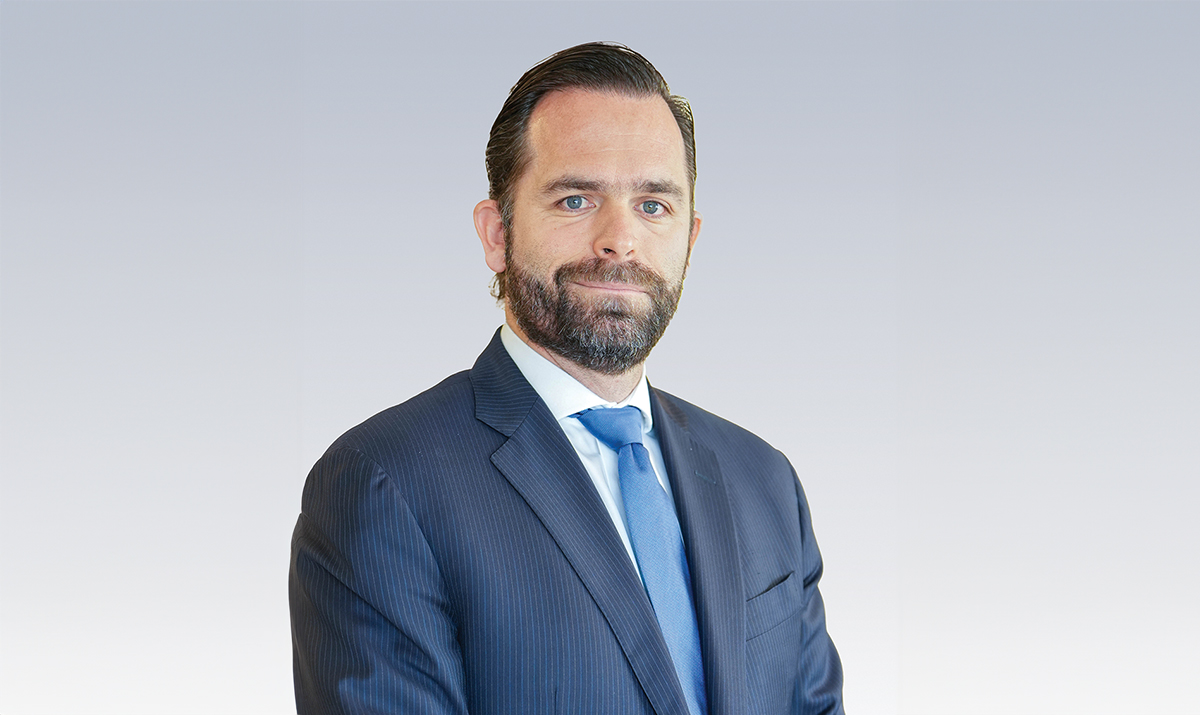
08 Feb Interview with Reggy Vermeulen, CEO of Port of Duqm
Around 77% of Oman’s trade passes through its seaports, which handled more than 137 million metric tons of cargo in 2024, an increase of 15% compared to the previous year. Over the same period, Port of Duqm recorded 152% growth in cargo throughput. Can you provide an overview of the country’s maritime system and explain why Port of Duqm stands out among Omani ports?
Oman has three main ports: Sohar, Salalah and Duqm. Sohar is largely a business-to-consumer port, serving the more populated north of the country and surrounded by a mature, successful industrial zone. At the other end of the country, the Port of Salalah is focused on transshipment for Maersk and other shipping lines, giving the port large volumes of captive cargo. Finally, the Port of Duqm lies in the Al Wusta region in the center of the country, which holds most of Oman’s oil and gas deposits, both onshore and offshore.
The government decided to build the new Port of Duqm here to cater to the already-mature oil and gas industry, while also facilitating economic diversification. There is a huge amount of available land in the area where other industries, like manufacturing, can establish themselves and benefit from our infrastructure. That is the difference between us and the other ports: Duqm is really a multipurpose, multimodal port that is positioned to sere the growth of the country.
Could you expand on how the Port of Duqm is enabling economic growth and diversification?
We are focusing on supporting the oil and gas industry and the decarbonization of the country, with significant hydrogen developments happening next to the port. For those projects, we are taking care of the logistics, the input and import of all equipment, as well as exporting hydrogen and derivatives. We are also helping the mining sector to export Oman’s mineral wealth that, along with oil and gas, is central to the national economy.
Finally, we are helping with the broader industrialization of the country. We have a refinery and we also host companies such as Jindal, Vale and Mitsui & Co. There is a focus on encouraging investors that fit with the country’s decarbonization agenda, at least in the longer term, as we develop their access to our local sources of hydrogen or green electricity.
How advanced is the port’s digitization strategy, and what technologies are being introduced to enhance logistics and efficiency?
Because we are a greenfield project without any legacy, we don’t have to change any of our installations or equipment to fit in with older systems. That provides a lot of versatility. For example, our cranes are fully 5G equipped and optimized with all the sensors needed to have operations automated. So, we are advanced, while still relying on manual expertise and skills.
The port is central to Oman’s planned hydrogen corridor linking the sultanate with the Netherlands and Germany. What progress has Port of Duqm made in advancing the country’s 2050 net-zero goal?
We are quite confident that, after the oil era, Oman will be very well positioned to be a major player in green energy, so we are preparing for that future role now. Our national agenda includes lots of initiatives being put in place by the Ministry of Energy and Minerals aimed at offering industries all the means of decarbonization that they need, from electricity to hydrogen, while also providing possibilities for carbon capture and storage for industries that cannot be decarbonized by other means.
We aim to welcome industries to Duqm and work with them on their paths to decarbonization. For us to do that, we are putting in place the necessary frameworks for industries to decarbonize at a pace agreed between us.
Why do you believe that Oman is the ideal destination for US investors?
Investors are increasingly looking for stable, predictable environments that also give them access to new growing markets. The challenge with this is that new markets tend to be quite unstable, like many places in Africa and the Middle East, which have huge potential but can scare off investors.
Oman is very interesting to those investors because it is an island of stability in this part of the world, thanks to the influence of the monarchy and its foreign policy of being a friend to all and enemy of none. In addition, the free trade agreement between the US and Oman provides an excellent bridge for American investors to approach a region that is going to become more important in the future.