
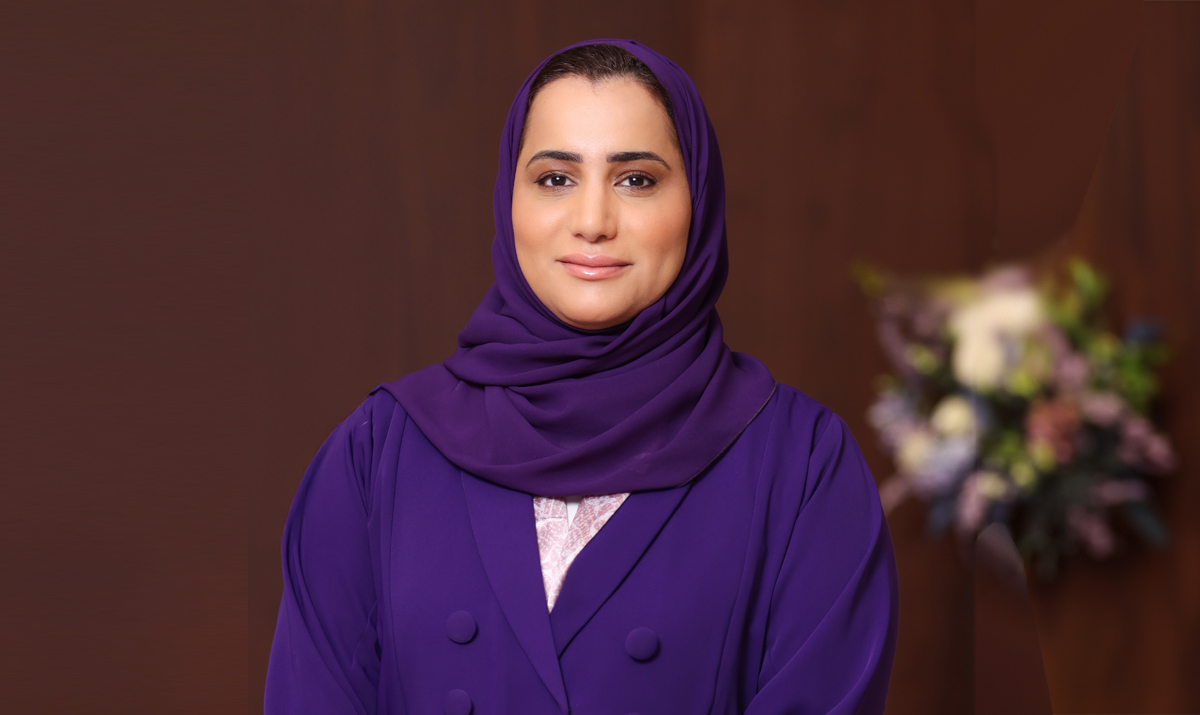
12 Feb Interview with Ibtisam Al Farooji, Undersecretary of Investment Promotion, Oman
Oman’s gross domestic product is projected to have grown by 2.9% last year, substantially driven by strong performance in non-oil sectors. That is consistent with the country’s ongoing economic transition from heavy oil dependence toward diversification in line with the Oman Vision 2040 strategy. Could you give us a quick overview of Oman’s recent economic performance and some of the fast-emerging sectors that are fueling growth?
Oman stands at a pivotal point in its diversification journey today. Under the leadership of His Majesty Sultan Haitham bin Tariq, Vision 2040 has become a living framework for economic renewal, centered on private-sector empowerment, innovation and global integration.
The results are tangible. Foreign direct investment (FDI) reached $78.78 billion by the end of the second quarter of 2025, reflecting 12.8% growth over 2024 and $8.84 billion in new inflows — clear evidence of investor confidence in Oman’s trajectory. This growth has been reinforced by robust expansion in the free and economic zones of Sohar, Duqm and Salalah, where integrated infrastructure continues to attract advanced industries and international partnerships.
Our focus sectors — manufacturing, tourism, agriculture and food security, information and communication technologies and mining — are delivering sustained momentum. Manufacturing alone has attracted nearly $15 billion in recent years, powered by Oman’s strategic geography, modern logistics network and stable regulatory environment. Political predictability, sound fiscal management and investor-protection laws further consolidate Oman’s reputation as a safe, forward-looking hub for global investment.
We’re now seeing accelerating interest in green and high-tech industries: renewable energy, hydrogen, green steel, green aluminum and electric vehicle (EV) battery production. These sectors represent the next phase of growth — anchoring Oman’s transition toward a clean-industrial economy and positioning the sultanate as a reliable energy and manufacturing partner for the world.
Can you tell us about some of the latest reforms that have been enacted to attract investors? How effectively do you expect these to boost Oman’s attractiveness and competitivity in the Gulf Cooperation Council region?
Oman’s reform agenda is centered on creating clarity and confidence for investors. For example, the recent Foreign Capital Investment Law established full ownership rights and simplified licensing, while the establishment of Invest OMAN in 2023 has unified all investment facilitation under one national gateway.
Through this platform, strategic projects — typically above $1 million — receive end-to-end guidance: licensing, consultation and local partnership support. So far, we have secured nearly 40 projects in manufacturing, healthcare, tourism and security. The approach is collaborative — ministries, free zones and agencies now work in concert to align sectoral priorities.
Complementing this is our 10-Year Golden Residency Program, which we revamped in 2025 to attract global investors, innovators and talent. With multiple pathways — ranging from property and equity investment to academic expertise — it promotes long-term residency and capital retention. The process is fully digital, ensuring transparency and efficiency. Ultimately, the program is about more than residency; it’s about building a community of global contributors who see Oman as a place to invest, innovate and belong.
Oman’s free zones and special economic zones are vital gateways for foreign investment. What makes these zones stand out from others in the region?
Our free and economic zones — Duqm, Sohar and Salalah — form the physical backbone of Oman’s industrial diversification. Each offers tailored incentive packages, including corporate tax exemptions, long-term leases and integrated infrastructure linking ports, airports and industrial areas.
What sets them apart is their flexibility: investors find not just land and logistics, but complete ecosystems with workforce training programs, export support and localized supply chains. These zones are where many of our large-scale manufacturing, energy and logistics projects have taken root. They reflect Oman’s vision of being both a production base and a connectivity hub for markets across Asia, Africa and the Middle East.
How does Oman’s free trade agreement with the US impact on investment relations with that country?
The US–Oman Free Trade Agreement is a unique advantage that investors increasingly leverage. It provides duty-free access to the American market — something few regional peers can offer. Combined with Oman’s network of trade routes, this transforms our free zones into efficient gateways for US-bound exports.
We are also advancing a comprehensive economic partnership agreement with India and exploring similar frameworks with the European Union and key African markets. The message to investors is clear: Oman is not only a domestic market but a strategic launchpad into neighboring economies — stable, connected and open.
Invest OMAN is the sultanate’s official investment promotion agency, overseen by the Ministry of Commerce, Industry and Investment Promotion. What have been some of its biggest achievements since its launch in 2023?
Invest OMAN has evolved from a licensing counter into a full-scale investment facilitation platform. Beyond facilitation, we now provide tailored business development, matchmaking and incentive structuring for large investors. To date, the platform has secured 39 projects worth over $3.8 billion, with manufacturing leading the portfolio. Our objective is to ensure every investor’s journey — from inquiry to operation — is seamless, transparent and anchored in opportunity.
What major contracts has the organization helped sign in the past three years?
Sohar and Salalah are seeing some of the most transformative industrial investments. Recently, for example, we signed an agreement with India’s GFCL EV battery company for a $489-million facility in Salalah. Discussions are also progressing with Jindal Steel on launching green steel production in Duqm, while solar panel manufacturing projects are underway in the north of the country. These ventures exemplify the new investment wave — technologically advanced, export-oriented and aligned with global sustainability goals.
Why should international investors consider Oman, and why should they do it now?
Oman offers a balance rarely found in emerging markets: economic stability, policy transparency and lifestyle quality. We welcome companies that seek both growth and long-term partnership. Through Invest OMAN, we ensure every investor has a clear pathway — backed by top-level coordination across government and a genuine commitment to success. For investors looking to anchor their future in a market defined by stability, opportunity and access — Oman is ready.