
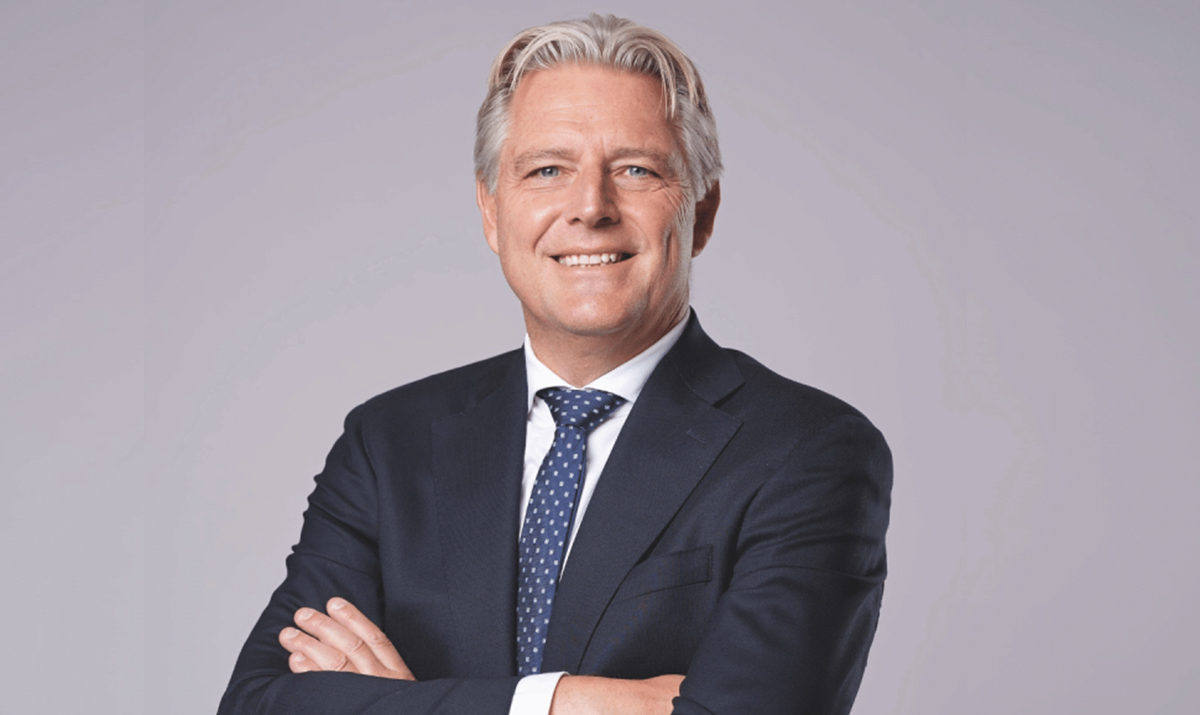
08 Feb Interview with Emile Hoogsteden, CEO of Sohar Port
Oman’s maritime sector accounts for 77% of the nation’s trade, with its ports handling more than 137 million tons of cargo in 2024, up 15% from the previous year. Why is Oman well placed to be a regional trade and logistics hub?
In many ways, Oman reminds me of the Netherlands. Both are seafaring nations with a strong tradition of exploration and trade. Oman’s long coastline and strategic location — outside the Strait of Hormuz and the Red Sea, and open to the Arabian Sea and Indian Ocean — make it ideally positioned for the future of global trade. As economic gravity shifts toward the Middle East and Southeast Asia, Oman stands in the right place at the right time. With its maritime heritage, enthusiasm and clear ambition to diversify beyond oil and gas, the country’s vision to become a logistics and maritime hub is both logical and achievable.
What measures has the government taken to bolster port infrastructure and streamline operations for traders and logistics firms?
Oman’s infrastructure is truly world-class — not only its ports, but throughout its industrial zones and logistics corridors. There is strong government commitment to maintaining this standard and to attracting international investment. Efforts are focused on enhancing connectivity and making it easier for foreign investors to do business in Oman. An important testament to this is the rail connection that is currently being constructed between Sohar and Abu Dhabi.
Launched in 2004, Sohar Port and Freezone has become one of Oman’s most important industrial centers. In the first half of 2025, it signed six new investment deals worth $1.3 billion in total, cementing its central role in the national diversification strategy. Can you give our readers a snapshot of Sohar’s scale?
The Oman Vision 2040 strategy is perfectly reflected in Sohar’s advance. When development began two decades ago, Sohar was a greenfield site envisioned to become a world-class industrial and logistics hub. Today, that vision has materialized: Sohar Port and Freezone handles over 75 million tons of cargo annually and serves as Oman’s main gateway for trade. It has also attracted over $30 billion in investments, created 42,000 jobs and it contributes 2.6% to Oman’s gross domestic product.
What is remarkable is that the original vision projected that we would be at full capacity by 2050, yet we have nearly reached that already in 2025. That is a testament to the government’s vision and the dedication of everyone who helped make it a reality.
We have seen a strong acceleration in investments in both the port and free zone over the past few years. At the port, for example, we are developing a $1.6 billion liquefied natural gas (LNG) plant with France’s TotalEnergies and the Omani energy company OQ, including land reclamation, shore protection and a new jetty — creating a new part of the port and fresh economic activity. In the freezone, a $1.35 billion polysilicon plant will establish a full solar value chain. Sohar serves as both a gateway for global trade and a platform for industrial growth, importing feedstock and exporting finished goods. We continue to evolve — developing LNG bunkering, renewable energy projects and even an electric-vehicle battery value chain — to meet the changing needs of the global economy.
Sohar has embraced Industry 4.0 through tools like its Marasi digital port management system, artificial-intelligence analytics, Internet-of-Things-based tracking and automation. Cybersecurity is another top priority, with dedicated awareness weeks and ongoing tech integration. How is Sohar ensuring it remains competitive in a global industry that is being reshaped by digital technologies?
We are constantly improving quality, efficiency and reliability — and digitalization is a key enabler of that. It is not a goal in itself but a tool to make operations more efficient, sustainable and transparent. Our new port management system, for instance, replaces paper-based processes with real-time digital data accessible to everyone across the supply chain — from shipping lines to customs. This reduces waste, costs, waiting times and emissions, while improving overall performance.
We are also implementing a Port Community System to enhance coordination. One major step has been making mass flow meters mandatory for vessel bunkering, ensuring precise fuel quantity and quality, which is crucial as new, costlier fuels emerge. This has been a game changer in saving both time and money. Additionally, we use aerial and underwater drones for maintenance inspections, allowing us to perform maintenance only when needed — reducing waste and improving efficiency.
Sohar is a frontrunner in Oman’s green industrial transition. In 2024, it launched the Sohar Net Zero Alliance, bringing tenants and partners together to drive renewables, green hydrogen and carbon capture and storage development. The company is also pushing forward with shore power infrastructure and low-carbon fuel exploration. What is Sohar’s overall strategy for sustainability?
The energy transition is reshaping industrial operations globally and we are taking decisive steps to lead this shift at Sohar. As an integrated port and freezone, we are transforming our energy ecosystem to enable low-carbon industry and cleaner trade. We are working toward a reliable bunkering hub, offering transparency and all future fuel types.
Our sustainable framework is built on four pillars: efficiency, renewables, hydrogen and carbon capture. Through digitalization and operational excellence, we are enhancing efficiency and reducing emissions. We are developing solar plants to power port tenants and exploring both green and natural hydrogen. We are also partnering with industries to capture carbon dioxide from factories for use in enhanced oil and gas recovery. Initiatives like shore power further support our drive toward cleaner operations.
Sohar’s visibility among US investors has risen through major trade show appearances and work with the US-Oman Chamber of Commerce. What key incentives do you offer new investors?
Sohar Freezone’s investment framework offers some of the most competitive incentives in the region — including 100% foreign ownership, tax exemptions and duty-free import of raw materials. Yet what truly distinguishes Sohar Port and Freezone is the stability, safety and reliability that investors experience on the ground. With more than $30 billion in cumulative investments and a proven record of business expansion, Sohar combines world-class infrastructure with efficient investor facilitation in close collaboration with government entities.
Our approach goes beyond providing land and utilities — we work side-by-side with investors from project setup through daily operations, ensuring seamless integration into our industrial ecosystem. Over the years, this partnership model has created a thriving value chain where industries exchange resources, share energy and generate synergies that strengthen Oman’s competitiveness and advance its Vision 2040 objectives.
You took over as CEO of Sohar Port in 2022, bringing more than 25 years of global experience in maritime logistics. What is your overall ambition for Sohar?
Our ambition is for Sohar Port and Freezone to be the leading port and free zone in the region, known for reliability, efficiency, transparency and customer value. We offer true partnership, supporting investors from start to finish. We aim to attract green manufacturing, develop green fuels, drive energy transition and leverage digitalization. Efficiency is key, supported by our talented pool of highly educated young Omanis. Everything we do reflects the quality and ambition of Sohar Port and Freezone.
To conclude this interview, do you have a final message for USA Today readers?
For investors, Oman offers one of the most stable and strategically located investment environments in the region. As global economic growth continues to pivot toward the Middle East and South Asia, Sohar Port and Freezone stands at the crossroads of opportunity. It is a proven port and freezone, home to many successful international companies, with excellent connectivity. Upcoming rail connections to the United Arab Emirates and, in the future, Saudi Arabia will further integrate Oman into the regional logistics network, creating new pathways for trade and growth.