
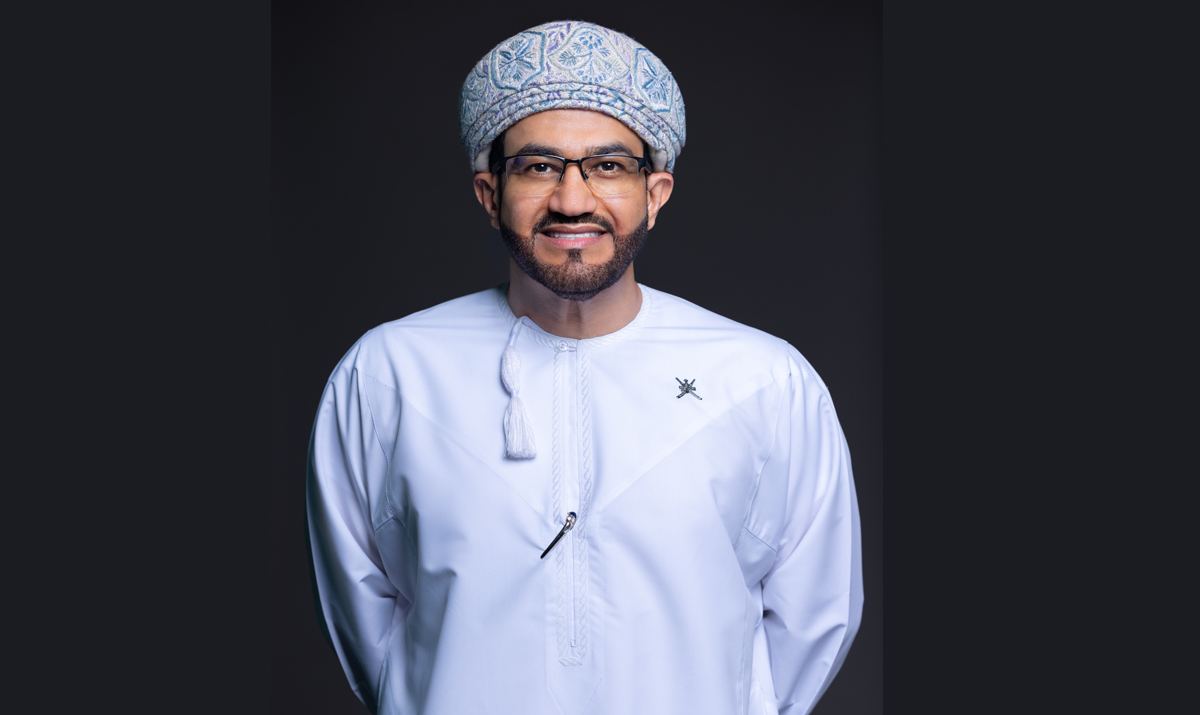
12 Feb Interview with Aflah Al Hadhrami, Managing Director of Petroleum Development Oman
Oman’s oil and gas sector remains a central pillar of the national economy, contributing roughly 30% of gross domestic product. What role have the country’s leading oil and gas companies taken on as the country advances toward a diversified economy under the Oman Vision 2040 plan? And how has the regulatory framework for exploration and production evolved in recent years?
Oman’s oil and gas sector has always been more than an economic engine; it has been the backbone of our national development. Even today, hydrocarbons generate the lion’s share of public revenue. If you look at the national budget, around 74% of governmental income comes directly from oil and gas, and another 12% is indirectly tied to the sector, which means that more than 85% of Oman’s fiscal strength still originates from hydrocarbons. This reality underscores why the sector remains central as we advance toward Oman Vision 2040.
Leading national energy companies, including Petroleum Development Oman (PDO), have, therefore, taken on a much wider mandate than production alone. We understand that our role is to help fuel diversification — by building national talent, supporting the growth of small and medium-sized enterprises (SMEs), investing in infrastructure and driving sustainable development. Oman Vision 2040 is clear: Oman must reduce its dependence on hydrocarbons. And the irony is that the oil and gas sector itself is the catalyst enabling that transformation, because it provides the financial stability, know-how and institutional strength upon which new industries can grow.
Regulatory frameworks have also matured significantly. Over the past decade, licensing rounds have become more transparent and competitive, concession agreements more balanced, and fiscal terms more investor friendly. Oman has introduced clearer in-country-value requirements, strengthened governance, and incentivized efficiency and responsible operations. This has created an environment where operators can plan long-term, invest confidently and thrive despite the volatility of global markets.
The result is a sector that has evolved from a resource extractor into a strategic partner in building Oman’s future; balancing today’s energy needs with tomorrow’s diversified economic landscape.
PDO is the country’s largest oil and gas producer, and it is the driving force behind Oman’s hydrocarbon and energy transition agenda. Could you introduce the company and explain its current role in advancing both the oil and gas industry and the broader energy transition?
PDO is not just another company in Oman; it is the cornerstone of Oman’s economy. Our story dates back to 1937, when the sultanate first began its journey into oil exploration. Our first export shipment was made in 1967, marking a turning point in the modern history of our country.
Today, PDO remains the largest producer of oil and gas in Oman, responsible for around 70% of national crude output in 2025. But beyond the numbers, PDO is a national institution that carries the weight of Oman’s economic security and future aspirations. Our operational footprint is enormous — our Block 6 alone covers a third of the sultanate. We operate airports, pipelines, fields with diverse geological profiles and one of the most complex upstream environments in the region.
Today, PDO’s mission is twofold. We deliver the energy that powers the nation, and we lead the transition toward a more sustainable and diversified energy future. From advanced enhanced oil recovery (EOR) technologies to new gas developments, to decarbonization initiatives, to talent development — PDO is shaping the energy system of tomorrow. We are not only an oil company; we are a strategic partner in Oman Vision 2040 and its long-term prosperity.
You’ve been heading PDO for nearly two years and are the company’s first Omani CEO. How has PDO transformed under your leadership?
Assuming the leadership of PDO was not simply an appointment to me, but a huge responsibility. For more than 85 years, PDO had always been led by expatriates, and being the first Omani managing director is something to carry with humility and purpose. I returned to PDO after 33 years in the global energy sector — Schlumberger, Occidental and BP — and brought with me a mindset shaped by international standards of ethics, governance and operational excellence.
When I arrived 1.5 years ago, and before talking about transformation or strategy, we had to solve an issue that was draining energy from the workforce. The matter was extremely complex — involving multiple government entities, legal interpretations and intense negotiations. We brought in global experts, including specialists from the International Labour Organization in Geneva and, after months of work, we resolved the issue that had lingered for more than three years. The relief and trust this created became the foundation for everything that followed.
Only then did we launch PDO’s transformation and, crucially, it was designed by our people, not by a consulting firm. I am a firm believer that real change does not come from PowerPoint decks made by international consultants. It comes from ownership. Our journey is built on four simple pillars: safety, production, cost competitiveness, and governance, ethics and compliance — underpinned by people.
We empowered young leaders, brought management physically closer and created psychological safety. We revived culture through transparency, accountability and direct engagement. I spend weekly lunches and dinners with young engineers because leadership is ultimately about being human, accessible and genuinely invested in people.
The transformation is now delivering real outcomes. In the last cycle, PDO achieved the highest growth plan in its history, and we are on track to increase production by up to 15%, strengthening national revenue and building future resilience. The momentum is now extraordinary.
And for me, the transformation is not complete until we prepare who leads PDO next. We launched a fully merit-based leadership acceleration program, selecting 52 top talents, facilitated by the London Business School. Remarkably, around 35% of the selected leaders are women, even though women make up only around 15% of PDO — which is still higher than the regional average of 11%. This is the future of PDO: diverse, capable, global in mindset.
My dream is simple: when I leave PDO, I want to leave behind a management team that is truly cosmopolitan — Omanis, expatriates, women and men, working together at international standards, not local comfort zones.
PDO allocated significant budget for project spending in 2024, setting the stage for multiple exploration and production initiatives. What key exploration successes has the company achieved in recent years and which major production wells are expected to come online under PDO’s upcoming upstream development phases?
This investment, which is a clear signal of our confidence in Oman’s long-term resource potential, supported a series of exploration successes across both oil and gas. Recent discoveries in the north and south of our concession area added meaningful reserves and extended PDO’s resource visibility for the coming decade. These results are not accidental; they are the product of disciplined subsurface science, advanced data analytics and a highly skilled technical workforce.
Looking ahead, some of PDO’s most significant growth will come from new development wells and EOR. According to published projections, EOR is expected to account for up to 28% of PDO’s total crude production by 2031, up from about 19% today — making Oman a global leader in large-scale EOR deployment.
We are also preparing multiple high-value wells to come online over the next few development phases, strengthening both oil and gas supply. These projects contribute not just to PDO’s portfolio, but to national revenue, energy security and long-term economic stability.