
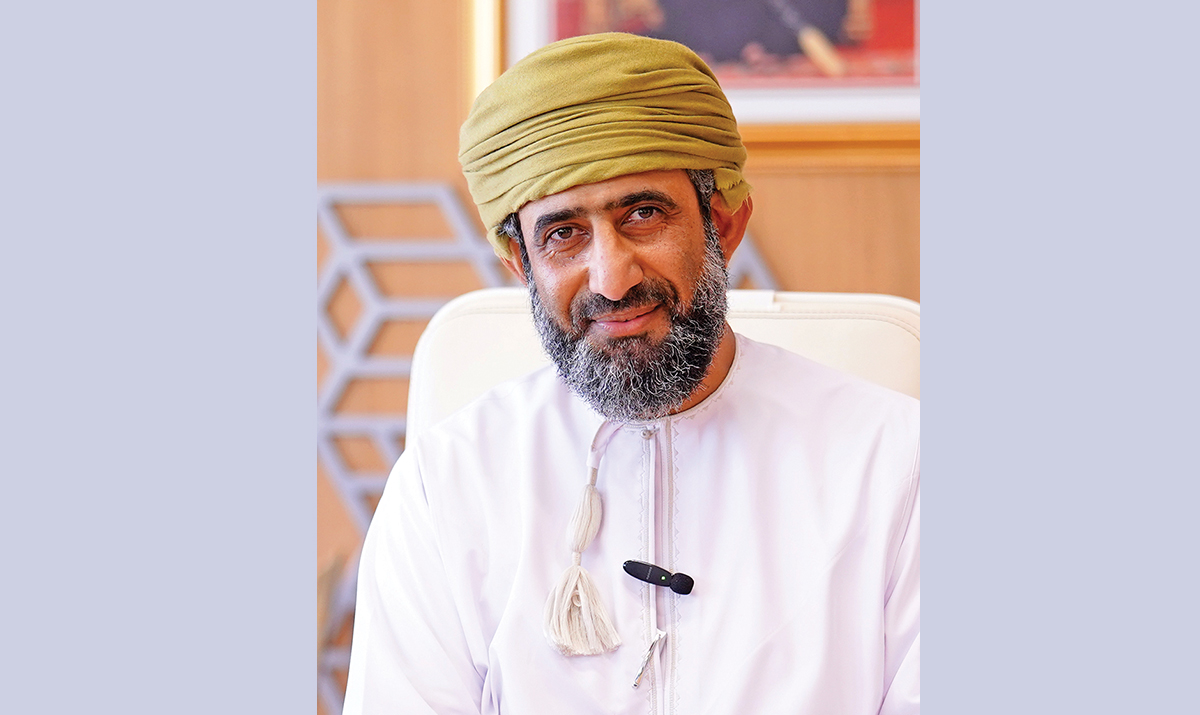
08 Feb Interview with Abdulaziz Al Shidhani, Managing Director of Hydrogen Oman (Hydrom)
Oman views hydrogen as central to transforming its hydrocarbon-based economy. Therefore, the government has introduced policy reforms, regulatory frameworks, auction mechanisms and fiscal incentives through Hydrom to attract international investments in green hydrogen projects. To start, could you summarize where hydrogen fits within Oman’s wider economic diversification strategy and why the country is uniquely positioned as a production and export hub for the fuel?
Our direction is guided by the Oman Vision 2040 strategy, which sets ambitious goals to diversify the economy beyond oil and gas, create jobs for our growing youth population and drive the energy transition. Renewable energy is a core pillar of this vision and hydrogen serves as a strategic enabler — translating Oman’s renewable potential into industrial value, exports and energy security. It is fully aligned with our national commitment to achieve net-zero emissions by 2050. To meet the decarbonization challenge, energy can either be directly electrified through renewables or converted into hydrogen for use as feedstock, transport or storage.
When we assessed our natural resources, we found Oman to be among the most competitive places globally for hydrogen — offering strong solar irradiation, steady winds and vast unpopulated land near international ports — factors many other countries lack. These factors provide the ideal foundation for large-scale green hydrogen production.
Oman’s geographical location gives us a competitive edge, sitting between Asia and Europe, while offering alternative shipping routes that ensure resilient hydrogen supply even in worst-case scenarios. We also have decades of experience working with international investors in oil, gas and power, which has built trust and confidence. Our supportive regulatory and investment environment, combined with this track record, makes Oman an attractive destination for green hydrogen investment.
What was missing before was a clear target, which is now defined in the Oman Green Hydrogen Strategy announced in October 2022. The strategy sets out clear targets to produce one million tons of hydrogen by 2030, scaling up to 8.5 million tons by 2050. Of this, 1.5 million tons will be consumed locally, while 7 million tons are intended for export — representing about 7% of global green hydrogen trade at the time of the forecast. This strategy strengthens Oman’s position in the energy market, reinforces energy security and supports industrial decarbonization. It also aligns with our economic diversification objectives under Vision 2040, creating long-term value through capacity building and positioning Oman as one of the world’s most competitive destinations for green hydrogen investment.
The Green Hydrogen Strategy also provided clarity on roles and responsibilities. Hydrom serves as the national orchestrator and single point of contact, making engagement easier for investors, backed by strong government support. The approach is results-oriented, fast and pragmatic — qualities that appeal to international investors. Round one of our auctions, launched in November 2022 and successfully closed in June 2023, completing the full process from promotion to signing in just seven to eight months.
Could you expand on Hydrom’s mandate and role in developing Oman into a leading hydrogen hub?
Learning from past experiences, both good and bad, showed the need for a central entity to engage with investors and the local ecosystem. Investors now know exactly who to approach, avoiding confusion from a fragmented process. Hydrom was formally established following royal directives in 2023, granting it legal authority to contract on behalf of the government and enter long-term agreements. Its mandate includes orchestrating the execution of Oman’s Green Hydrogen Strategy, starting with the design of the auction process.
After managing contracts post-award, we moved to design Oman’s unique common-use infrastructure model, providing shared facilities to create economies of scale and derisk investments. Hydrom orchestrates this process but does not build the infrastructure — national champions are appointed to execute it. Our role is to ensure infrastructure development is timely, cost-effective and aligned with investor needs. We also addressed potential bureaucratic delays by establishing the Green Hydrogen Ecosystem Readiness Lab, a nine-day intensive co-creation process that produced 26 initiatives to streamline approvals and enable the sector’s growth.
One key initiative is the single and automatic permit, which reduces approvals from 36 entities to just seven. Once investors meet the requirements, the permit is automatically granted. Each development block is around 135 square miles, and investors can start work immediately, reporting any findings such as cultural or environmental sites. This approach accelerates project execution, lowers costs and reflects strong government support for the green hydrogen sector, demonstrating the high level of sponsorship behind it.
A second initiative addressed logistics for the massive scale of materials needed, including 40 million solar panels and 2,000–3,000 wind turbines. Oman had no prior experience handling this, so we planned early. Port capacity has been confirmed, and Asyad Group established a control tower to manage smooth transport from ports to sites, coordinating with the Ministry of Transport, Communication and Information Technology and Royal Oman Police. This plan is monitored quarterly by a government committee led by the Minister of Energy and Minerals, reflecting strong sector support.
Following the three green hydrogen auctions you held between 2022 and April 2025, what are the next steps planned under Hydrom’s three-phase roadmap?
We have set targets for 2030, 2040 and 2050. Round one and two put us just above the 2030 target, while Round three is laying the groundwork for 2040. Its closure is planned for the first half of this year, after which we’ll assess market readiness for the next round. Our focus is now shifting toward creating a domestic hydrogen market, targeting mobility, industry and special use cases, such as phasing out gas in the steel sector and transitioning to green hydrogen.
Hydrogen is central to the country’s decarbonization journey. Oman is committed to commissioning multiple hydrogen projects each year, with one currently under construction and more to follow despite global market uncertainties.
Hydrom has placed strong emphasis on innovation and talent to build a strong local hydrogen ecosystem. Among other things you partner with universities and training institutes to close skill gaps in renewables and hydrogen technologies. How has the company targeted its development of talent?
It was important first to identify gaps before assessing readiness. The Ministry of Energy and Minerals, Hydrom and the Energy Association of Oman (OPAL) conducted a gap analysis for the hydrogen and energy transition sectors. Based on its findings, several local academic institutions have started bachelor’s and master’s programs to address competency gaps. There is also strong growing interest from young professionals, eager to build careers in future-oriented sectors like green hydrogen and renewable energy.
To what extent is Hydrom working to stimulate the participation of local small and medium-sized enterprises in a sustainable hydrogen value chain?
Our five strategic objectives go beyond energy production: energy security, economic diversification, decarbonization, attracting foreign investment and capacity building for people and SMEs. In evaluating auction bids, up to 25% of our score is based on domestic industry development and local content, including SME participation, training and centers of excellence. This often becomes a key differentiator among strong international bidders. We also work with ministries and OPAL to create platforms for SMEs, enabling them to contribute to wind, solar and green hydrogen projects.
In order to achieve Hydrom’s targets, around $48 billion will need to be invested, primarily through foreign direct investment. What sort of appetite are you seeing from international investors?
The estimated $48-$50 billion in investments reflects strong international investor interest in Oman’s resources, framework and commitment. The results of our auction round three will show if this appetite continues. We expect some natural filtering as investors do deeper due diligence and align expectations. Going forward, only serious participants will join Hydrom, increasing the likelihood of projects reaching final investment decisions, construction and operation.
The US is a key partner in Oman’s wider energy industry. Are US investors participating in the green hydrogen sector?
Participation from US companies in rounds one and two was limited, likely due to a lack of targeted engagement. We believe there is strong potential interest from US firms, given their higher risk appetite, advanced technology capabilities and pragmatic approach to project development. Oman offers a transparent and structured framework for investment, supported by clear land allocation, financing opportunities and robust regulatory processes. The existing US–Oman Free Trade Agreement further enhances this value proposition, creating significant opportunities for US investors to participate in Oman’s emerging green hydrogen sector.
US investors should know that Oman offers world-class resources supported by a results-oriented framework and an investor-friendly environment. Many US firms in oil and gas already enjoy successful partnerships here. It is just a matter of taking the next step to explore opportunities in hydrogen, and I am confident they will be interested.
US investors should take a closer look at Oman in general — it offers one of the best global opportunities in the energy transition, particularly in hydrogen, and Oman is ready to partner with forward-looking companies to accelerate the global shift toward clean energy.
How would you sum up your vision as Hydrom’s managing director?
The vision is twofold: supporting the country’s broader goals and positioning Hydrom as a results-oriented, trusted role model for both local and international investors. Our responsibility is to ensure hydrogen is seen as a long-term sector within Oman’s evolving energy mix, despite global uncertainties. We will continue to operate with agility and transparency, offering a structured framework, competitive incentives and proactive engagement with stakeholders to sustain confidence and momentum across the market.