
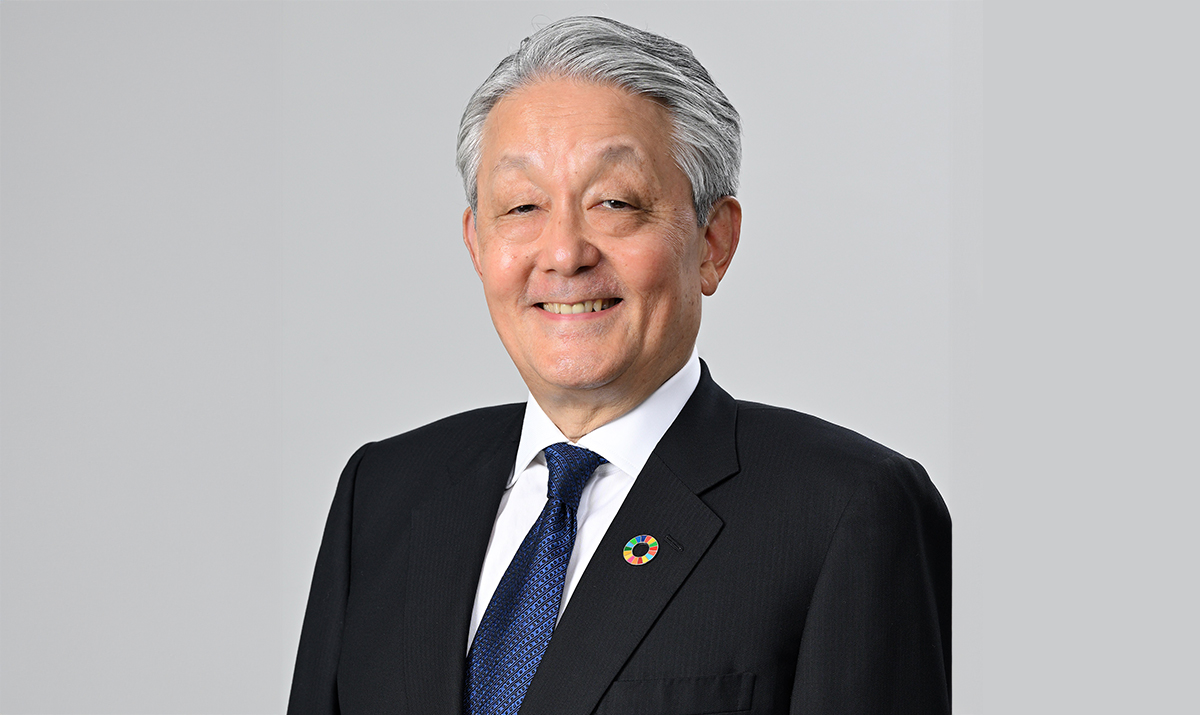
04 Feb Interview with Mr. Yamaji Hiromi, Director and Representative Executive Officer, Group CEO of Japan Exchange Group, Inc.
What are JPX’s current priorities in strengthening cooperation between Japanese and U.S. capital markets, and where do you see the greatest opportunities for deeper collaboration?
We maintain strong, long-standing relationships with U.S. exchanges, particularly the New York Stock Exchange and Nasdaq, supported by multiple partnerships and MOUs. A key milestone was an agreement signed in September 2022 to promote cross-border investment between Japan and the United States, with a particular focus on actively managed Exchange-Traded Funds.
Following extensive dialogue with U.S. counterparts, Japan introduced actively managed ETFs in September 2023, drawing directly on U.S. market experience. Today, 28 actively managed ETFs are listed and actively traded in Japan. We also have a long-standing operational relationship with Nasdaq, whose matching engine has powered the Osaka Exchange – JPX’s derivatives market – for more than 15 years.
While global exchanges naturally compete for investment flows, the U.S. market’s scale and depth are unique. We continue to learn from its experience, adapt relevant practices to Japan, and further strengthen this mutually beneficial cooperation.
How does JPX balance market innovation with its responsibility to ensure transparency and stability?
As a market operator, JPX’s core responsibility is to ensure fair, transparent markets supported by high-quality disclosure. To better serve global investors and listed companies – primarily Japanese, alongside around 30 Asian firms – we continuously enhance our market infrastructure and services.
We have increasingly integrated AI and advanced technologies to improve efficiency and strengthen market integrity. AI-assisted market surveillance was introduced in 2018 and has since been upgraded to detect suspicious trading behavior, including spoofing. On highly active days, when markets can receive up to 200–300 million orders, AI plays a critical role in screening transactions, while final judgments remain with human experts. We are expanding AI use to further improve service quality, informed by best practices from the U.S. and other international markets.
How are Japan’s corporate governance reforms contributing to sustainable growth and long-term value creation?
Strong corporate governance underpins investor confidence and long-term market attractiveness, but it must continuously evolve. Japan began advancing governance reform in the late 1990s after the economic bubble burst, when traditional bank-led oversight through cross-shareholdings declined and foreign and individual investors took on a larger role. In response, the Tokyo Stock Exchange assumed a more active role, with reform accelerating after 2013, when corporate governance became a core pillar of Japan’s growth strategy.
A major milestone came in 2015 with the introduction of Japan’s Corporate Governance Code, developed with the Financial Services Agency. The principles-based “comply or explain” framework encourages meaningful disclosure rather than box-ticking and is designed not only to manage risk but also to support growth by promoting informed risk-taking, stronger boards with independent directors, and more constructive dialogue with investors.
The impact has been substantial. Before 2014, only 6.4% of companies in the TSE’s top segment had boards with more than one-third independent directors; today, 99% of Prime Market companies meet that threshold. These reforms were reinforced by the 2022 reorganization of TSE’s equity markets into Prime, Standard, and Growth segments, each with clearer governance expectations.
In 2023, the TSE encouraged Prime and Standard companies to focus on capital efficiency, asking boards to assess cost of equity, improve ROE and PBR, and deepen investor engagement. Ninety-two percent of Prime-listed companies responded, demonstrating that transparency and peer pressure can drive change without formal penalties. The objective is sustained improvement in mid- to long-term corporate value.
These reforms have coincided with Japan’s exit from prolonged deflation, with inflation exceeding 2% for three consecutive years. Companies are shifting from cash hoarding to investment, contributing to record corporate profits over four years and record M&A activity—around 4,700 transactions in 2024 and more than 5,100 in 2025, totaling approximately ¥35.7 trillion. Household financial assets exceeding ¥2,200 trillion are also gradually moving from low-yield deposits toward investment.
Global investor interest has followed. While investors once questioned whether change would endure, many U.S. and European asset owners now recognize that governance reform is delivering tangible results, with growing engagement from first-time global investors reinforcing momentum.
To broaden progress, we have encouraged clearer corporate communication. While the top 25–30% of Prime-listed firms already operate at global standards, our focus is now on supporting the next tier. Based on interviews with around 400 global investors, we published governance best-practice case studies in 2024 and updated them in 2025 to help close disclosure gaps and strengthen competitiveness.
How is JPX advancing ESG initiatives, and how do these efforts support sustainable finance and investor confidence in Japan?
ESG initiatives are now firmly embedded in Japan’s corporate governance reforms. On the environmental side, JPX has promoted climate-related disclosures aligned with TCFD recommendations under the Corporate Governance Code since 2021 and is now moving toward ISSB-based disclosures, including Scope 3 emissions.
These requirements will be introduced under the Financial Products and Exchange Act through a phased approach, starting with the largest listed companies and expanding over time. This transition will help Japan align more closely with global disclosure standards and enhance transparency for international investors.
On the social side, we actively promote board diversity, including gender and nationality. At JPX, women account for more than 30% of board members – an advanced level by Japanese standards, though further progress is needed. Encouraging diversity remains a core part of our governance agenda for listed companies.
What is your final message for our readers of USA Today?
While global markets are becoming more fragmented, international investors continue to seek the most attractive opportunities worldwide. As a market operator, our role is to ensure that Japan remains open, accessible, and competitive – offering transparency, liquidity and strong returns.
We will continue to enhance the attractiveness of our markets for global investors. Japan is open for investment, and we invite investors to look closely at the opportunities Japan offers.