
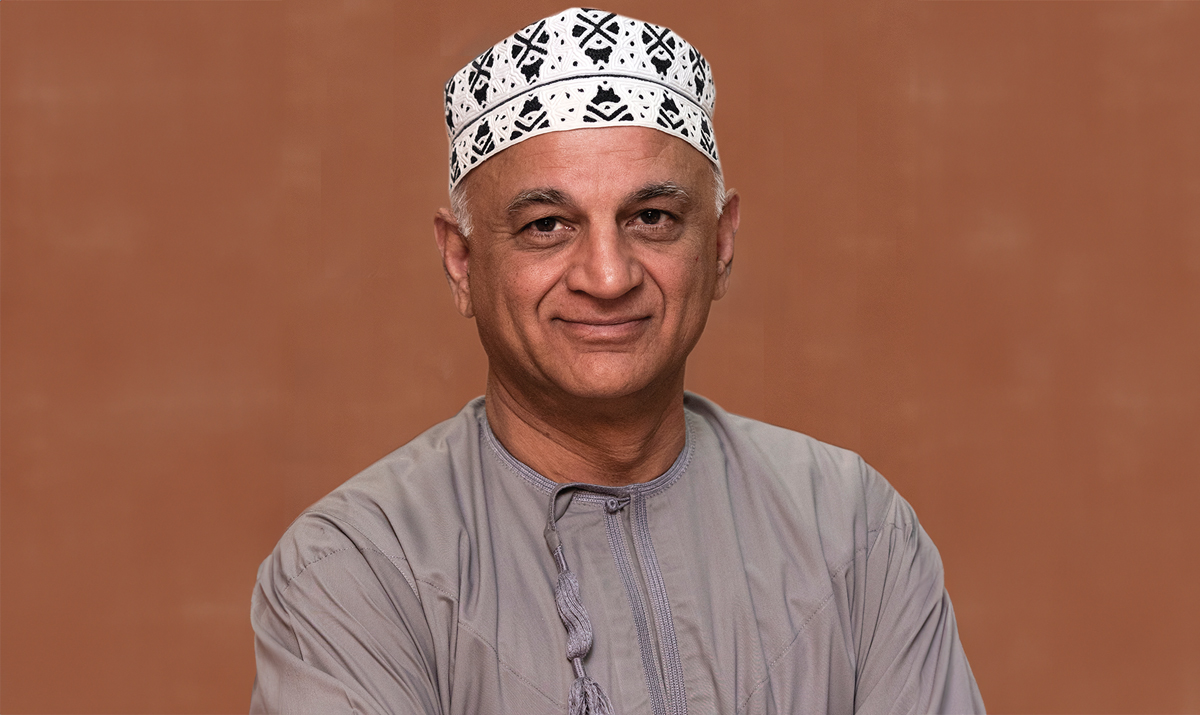
08 Feb Interview with Ali Daud, Chairman and Rebecca Olson, CEO of AmCham Oman
Oman’s gross domestic product is forecast to expand by 3.7% this year, with growth being catalyzed by non-oil sectors. How is the country progressing toward its goals for economic diversification?
Ali Daud: In the past few years, we’ve seen diversification move beyond plans into tangible results. The Oman Investment Authority has been instrumental in this, consolidating state-owned enterprises, restructuring them for efficiency and driving investments into logistics, petrochemicals, mining, fisheries and manufacturing. Downstream industries are expanding, and links are being created between large industrial anchor projects and small and medium-sized enterprises (SMEs), which is how you build real value chains. Furthermore, Oman’s ports and free zones are increasingly competitive, and more mid-sized companies are exporting.
Of course, oil and gas still provide the economy’s foundation, but the difference now is that the revenues are being channeled into sectors that will sustain the economy for decades to come.
Established in 2003, AmCham Oman is the sultanate’s largest business networking organization. Could you summarize the organization’s role and how it has evolved?
Ali Daud: AmCham Oman’s mission has always been to promote trade, investment and commerce between Oman and the US, with the free trade agreement between our two countries as the foundation. In fact, the FTA is more relevant than ever — at a time when global trade barriers are increasing, the US-Oman FTA gives companies operating from Oman a clear competitive advantage — not just in the US, but across the wider region.
In 2017, we became the official American Chamber of Commerce in Oman, focusing on advocacy, showcasing Oman’s strengths and facilitating business connections. Last year, we also signed a partnership agreement with the Oman Chamber of Commerce and Industry, which recognizes our leadership in connecting the US and Omani private sectors. We’ve become a more effective bridge — not just facilitating introductions, but helping companies move from interest to execution.
Today, our focus is practical: helping companies enter the Omani market, understand the ecosystem, and use Oman as a base to scale into the Gulf, India, East Africa and South Asia — and vice versa for Omani companies scaling into the US.
Rebecca Olson: Since 2003, we’ve grown into a community of over 300 member companies, hosting events nearly every week, making us one of Oman’s most active and effective business networking platforms.
This year, we launched Oman Edge, a new series designed to highlight what sets Oman apart from other Gulf countries. Many Americans still don’t know much about Oman, and we want to change that — showing why it’s such a smart and strategic place to invest. Our first panel featured the Undersecretary of Tourism, the CEO of Oman’s largest and most diversified private integrated real estate and tourism development company, the head of the Marriott Business Group in Oman and the head of tourism investments at Oman Investment Authority. Our events showcase real opportunities and the government’s proactive role in attracting investment.
In the past two years, we’ve also launched trade services to help Omani exporters access the US market through our Export Compass program — guiding them through certifications, connecting them with buyers and getting them market-ready. We also formalized Gateway Oman, a tailored program for investors, which has successfully brought US companies here that might not have considered Oman otherwise. We set up essential meetings with key stakeholders and support public and private sector engagement. Together, these initiatives are strengthening trade and investment in both directions. It’s been an incredible period of growth.
Oman has a large public sector, but also a thriving private sector. Can you explain how the private sector is advancing innovation in the country?
Ali Daud: In Oman, the private sector employs as many people as the public sector and is a major driver of the economy. Innovation stems from entrepreneurship, which overwhelmingly comes from the private sector. The government’s role is to create the right environment — through support and collaboration with organizations like ours — so the private sector can thrive, generate wealth and contribute to national growth.
What steps has AmCham Oman taken to support innovative SMEs and talent within Oman?
Ali Daud: SMEs are the backbone of every economy, and Oman is no different. While many have traditionally sought government jobs, entrepreneurship creates far more opportunities — one job versus ten. At AmCham Oman, we promote the value of SMEs by connecting them with larger companies, offering discounted memberships and giving them a platform for visibility, learning and growth.
Rebecca Olson: This year, we launched the AmCham Oman SME Forum to take that support even further. This brings together Omani and international entrepreneurs, ecosystem stakeholders and large corporations to discuss challenges and explore possible partnerships. We’re also creating more targeted programming under our committees and trade services to ensure that smaller businesses benefit from the same international connections and visibility that larger members enjoy. Omani SMEs have fantastic potential, and our role is to make sure they’re connected, confident and prepared.
Ali Daud: In terms of supporting talent development, we are investing heavily in capacity building and training. In partnership with AmCham Egypt, we are working to replicate their successful programs here, both online and locally, for the public and private sectors. We are also in talks with leading global institutions to bring world-class training to Oman’s business community and government.
By the end of 2025, around 80% of Oman’s governmental services had been digitalized. What advancements do you expect in the coming years?
Ali Daud: The government is determined to achieve digitalization, and I believe they will exceed their goals. Omanis are digitally savvy, and many public and private institutions, like the Royal Oman Police, have implemented highly efficient digital systems. Progress is rapid, and the results so far show that full digitization is achievable sooner than expected.
With the country targeting net zero by 2050, what opportunities does its decarbonization strategy offer the private sector?
Ali Daud: Oman has long been environmentally conscious, and its people are responsible stewards of nature. Opportunities in green hydrogen, carbon sequestration and the circular economy are emerging, with collaboration between the government, private sector and investors driving progress.
The US is a major investor in Oman, with participation across energy, infrastructure, advanced manufacturing and other sectors. In April last year, you met with Assistant US Trade Representative for European and Middle East Affairs Bryant Trick to advance the future of Oman-US trade relations. What does the American partnership represent for Oman today?
Ali Daud: The relationship is strong and commercially vibrant. The US is Oman’s second largest foreign direct investor, and both countries are eager to strengthen this partnership further.
When we approach potential US investors and buyers, highlighting that Omani products qualify for preferential access under the US–Oman Free Trade Agreement makes a real difference. Under the US global tariff structure introduced in 2025, almost all of Oman’s exports are capped at a 10% reciprocal tariff, while most other countries face both original base tariffs — which Oman does not — plus additional tariffs that can reach as high as 50%. That makes Oman a uniquely competitive export platform. The benefits are reciprocal, with US goods still enjoying duty-free entry here.
What do you think are the most compelling investment opportunities for US partners within Oman’s evolving industrial ecosystem?
Ali Daud: The country offers opportunities in the green economy. Oman’s underdeveloped tourism sector is about to take off and recent reforms in mining have unlocked access to critical minerals like lithium, presenting high potential for US tech companies. Manufacturing under the free trade framework is also underutilized: Oman provides cheap energy, strategic location and lower tariffs, making it an attractive export platform to the US.
Rebecca Olson: Manufacturing is where Oman’s real potential lies. Its major ports are known for efficiency, and when it comes to exporting to the US, it’s quicker from Oman’s location outside of the Strait of Hormuz. Besides low energy costs, Oman has strong availability of high-quality raw materials, including medical-grade plastics and green steel. From Oman, companies can serve the Gulf Cooperation Council region, tap into Indian Ocean trade routes and align with emerging trade agreements across the region, such as the Comprehensive Economic Partnership Agreement with India.
Ali Daud: My message to potential investors would be: Come and discover Oman. AmCham Oman — the American Chamber of Commerce in Oman — is your go-to for support, whether for business or personal visits. Oman may be less familiar than some of its neighbors, but for companies looking for a stable, cost-effective base to grow across the region, the opportunity is real — and ready.
What are your personal ambitions for AmCham Oman going forward?
Ali Daud: The organization will continue promoting trade, investment and business between Oman and the US, advocating for a competitive environment, showcasing Oman’s strengths and facilitating deals for our members — whether investments, trade or other transactions.
Rebecca Olson: Our goal is impact — taking what we’ve built and expanding it in ways that create results for our members. That means strengthening our programs and helping more US and Omani companies turn conversations into concrete partnerships and investments.