
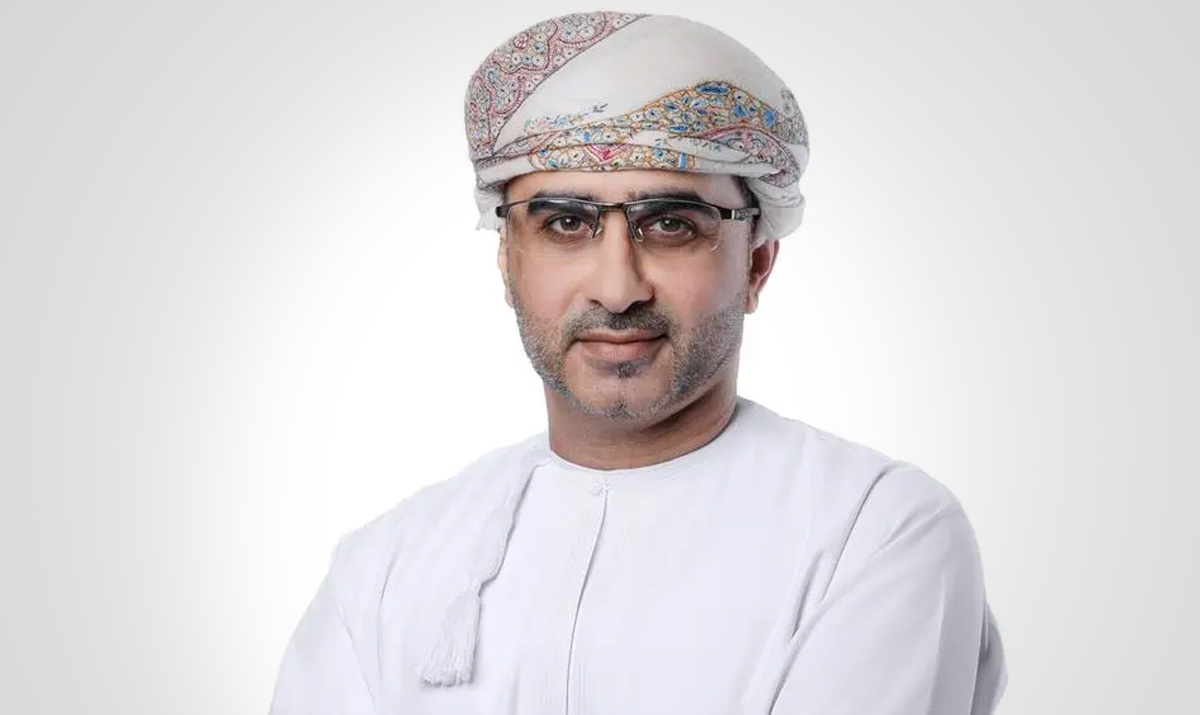
08 Feb Interview with Hussain bin Ali Al Lawati, CEO of Development Bank, Oman
Since its founding in 1976, state-owned Development Bank has evolved from financing microbusinesses to becoming a major force behind national infrastructure. In recent years, it has expanded lending activity, broadened its geographic reach, and aligned with government frameworks supporting small and medium-sized enterprises, sustainability and digital transformation. For the readers of USA Today who may not be familiar with the bank, could you introduce it and describe its mission today?
Historically, the Development Bank of Oman had a narrow focus — first industrial, then agriculture and later only SMEs. In 2023, its mandate evolved to become a key enabler of Oman Vision 2040 projects. Our role is to bridge the financing gap in sectors where commercial banks have limited appetite, such as agriculture, fisheries, industrial projects and tourism, due to perceived risks and financial inclusion challenges. These sectors are essential for diversifying Oman’s economy, which has long relied on oil and gas.
Our goal is to provide funding until these sectors mature and commercial banks increase their involvement. Over time, as these sectors grow, commercial banks will gradually take a larger role, while we continue to support areas with limited access to finance. As well as our mandate being officially expanded, our capital is increasing from $260 million to $1.3 billion, allowing us to support larger projects — up to $19 million per transaction — beyond micro-SMEs. This enables us to have a broader developmental impact in line with Vision 2040.
We have defined five key pillars that guide our decisions: employment, food security, self-sufficiency, regional development and attracting foreign direct investment. Whenever we consider a loan, we evaluate whether it aligns with one or more of these pillars. If a project doesn’t contribute meaningfully, we usually don’t pursue it. We also support technology and digital transformation, but since we lack full expertise in these areas, they are not yet formal pillars. For now, our focus remains on employment, self-sufficiency, FDIs and regional development, until we build the capacity to expand further.
In the first half of 2025 alone, the bank approved over 3,700 loans worth $285 million, with key investments in manufacturing, services, agriculture and mining. Why has manufacturing emerged as a priority sector, and what kind of long-term impact could Development Bank’s new projects deliver for Oman?
Our focus on manufacturing is driven by employment, self-sufficiency and strategic positioning. Oman has a large youth population, so manufacturing can absorb significant employment gaps. While Oman currently imports more than it exports outside oil and gas, the country has the infrastructure, raw materials and climate to support self-sufficiency in both daily needs and transformative industries. Logistics and shipping costs are major factors in manufacturing and Oman’s 2,000-mile coastline, ports and free zones make it an ideal hub for regional markets, including India, Pakistan and Iran. By supporting industrial projects, we aim to boost employment, reduce imports and create export opportunities.
What are the growth prospects for agriculture and fisheries as national export sectors and what sort of projects is Development Bank currently supporting in these areas?
Fishing in Oman is not just a job — it is part of our heritage. We support fishermen so they can continue their trade rather than seek fixed-income jobs, helping preserve the sector and reduce pressure on government employment programs. Many fishermen lack access to banking, so we provide loans for boats, nets and equipment. Their catch is sold to wholesalers and even exported, supporting both livelihoods and the economy.
We take the same approach in agriculture. Oman has land, water and infrastructure to grow fruits and vegetables locally instead of importing them. We support farming as a viable business, from small-scale activities to larger projects like poultry farms and aquafarming. We also facilitate trade, ensuring local products reach the market alongside imports, often using blended finance and partnerships for larger transactions.
Which other projects do you believe will have the biggest impact on Oman’s long-term diversification?
For us, “big” is about impact, not size. Many of our largest projects are in hospitality and tourism. We finance hotels across Oman, from modest to four-star, ensuring adequate facilities for tourists and visitors. We are now focusing on renewable energy. As a government-owned bank, we can offer longer-term, flexible loans — often beyond 10 years — unlike commercial banks, making us a key partner in green projects. With proper governance now in place under Oman’s Net Zero Center, we are supporting large-scale renewable infrastructure, solar installations in industrial areas and mitigation initiatives. We are also pursuing accreditation with the Green Climate Fund to finance adaptation projects like dam construction.
The bank has a major role in supporting job creation and entrepreneurship across Oman. How is it working to close skills gaps and raise “Omanization” rates in strategic industries?
For every project, our first consideration is how much employment it generates. We also support small loans to bridge gaps, especially for freelancers and young graduates. Many expect to follow the traditional fixed-salary path, but we aim to promote entrepreneurship and job creation. Through our interest-free loans, we help graduates start small projects — whether a freelancer buying a camera, an artist funding instruments or someone starting a taxi or bus service. This support allows them to earn income, gain experience and avoid being dependent on government jobs, while promoting a culture of self-reliance and entrepreneurship.
We set mandates for every corporate loan we make, such as maintaining a certain level of Omani employment. Subsidized loans from the Development Bank are conditional on meeting these requirements. If corporates don’t comply, they can still borrow, but without the subsidy. This incentivizes corporates to create jobs and contribute to local development. We also act as the government’s lending arm for initiatives such as post-Cyclone Shaheen recovery, distributing interest-free loans to those affected while handling monitoring and follow-up. Personally, I prefer lending to the private sector rather than the government, bringing public and private efforts together without directly lending to government entities.
What emerging sectors in Oman’s economy offer the strongest potential for US investors — and why is now the right time to get involved?
Hussain Al Lawati: We don’t directly bring in FDIs, our role is to support investors already in Oman. We provide working capital lines to help manage cash flow and act as a guarantee partner, ensuring they can access local services and raw materials. We don’t finance infrastructure setup, but we help investors operate sustainably and maintain continuous supply chains, offering financial support when needed.
Oman is highly suitable for renewable energy and green hydrogen investment. The country is committed to producing 1 million tons of green hydrogen by 2030 and 8 million tons by 2040, with strong offtake agreements from Germany, the Netherlands and Japan. Achieving this requires over $260 billion in infrastructure investment. Oman has abundant solar resources — 3,200 hours of sun annually — and has allocated over 25,000 square miles of land for renewable energy. With a net-zero by 2050 goal and a prime logistical location, Oman offers a strategic hub for green energy projects, including green steel and other industrial initiatives.
In your opinion, could more be done to draw further international investment to Oman?
Oman has made strong progress: regulations are improving, incentives are increasing and infrastructure is in place. However, the world still doesn’t fully know Oman — its strengths, culture and opportunities. Oman is one of the most geopolitically stable countries in the region, with a 2,000-mile coastline, abundant land, a small population and favorable climate. Rather than trying to compete with neighbors, Oman should showcase its unique advantages — logistics, workforce, resources and stability — to attract investors who recognize its value and potential for sustainable, long-term investment.
Oman is a beautiful country with welcoming people and strong incentives for investors. With its Renaissance 2.0 initiatives, Oman is moving in the right direction and offers one of the safest investment environments in the region.
Can you tell us about Credit Oman and how it supports Omani exporters?
I recently became chairman of Credit Oman, and our focus is on how it can work together with Development Bank to support Oman’s overall development, including boosting exports and conserving hard currency reserves.
Credit Oman was established to bridge the trust and financing gap for exporters, especially smaller ones with limited access to banking instruments like letters of credit. Though export beyond oil and gas has historically been limited, the world is now open to Omani products. Credit Oman provides guarantees and share risks with banks, ensuring exporters are paid and importers’ shipping and insurance needs are covered.
Over the past five years, Credit Oman has facilitated over $5.7 billion in exports, excluding oil and gas — a significant achievement for Omani SMEs, who historically didn’t access international markets. With government support and His Majesty’s leadership, small SMEs are now meeting clients and participating in business delegations both abroad and in Oman. Credit Oman plays a key role in bridging trust gaps, providing confidence for new exporters to engage in international trade.
In a recent board meeting, we introduced Oman’s first credit insurance pilot. Traditionally, no one insured debts here, so we developed a short-term product to secure bank loans on behalf of borrowers. Our aim is to scale Credit Oman into an export credit agency and that is the direction we are working toward. We are assessing demand and feasibility, with guidance from international experts, to decide whether to create a separate entity or integrate it under the Development Bank. This will also help build confidence for buyers and sellers to engage in transactions without complex banking procedures.