
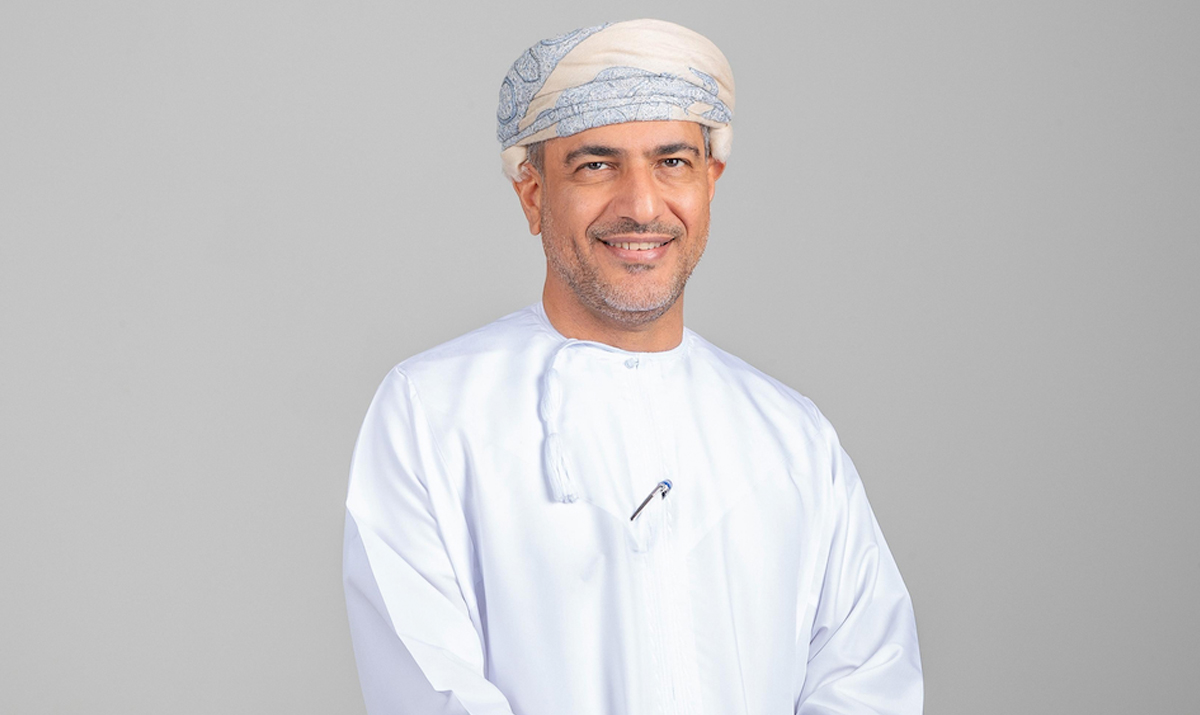
12 Feb Interview with Mohsin Hamed Saif Al Hadhrami, Undersecretary of the Ministry of Energy and Minerals
Oil and gas anchor Oman’s economy, accounting for nearly 60% of export revenues and 70% of the government’s budget. What key trends are shaping the sector and wider energy and mining industries today?
The energy sector is the driving force behind achieving our Oman Vision 2040 strategy. All economic sectors thrive on energy, and the vision’s ambition to diversify and transform the economy requires sustainable, reliable and affordable energy.
For over 50 years, oil and gas have been the backbone of Oman’s economic and social development, and they will continue to play an important role in the long term. However, Oman is steadily progressing toward renewable energy and green hydrogen to ensure a balanced and sustainable energy future. The national target aims for a minimum 30% share of renewables in power generation and 1 million tons of green hydrogen production by 2030.
Over the past few years, several major projects have been commissioned and sanctioned, strengthening Oman’s energy infrastructure and advancing its diversification goals. The new Duqm refinery and strategic oil storage facilities have enhanced downstream capabilities, while the 500 megawatt Ibri solar plant has marked a milestone in renewable power generation. Ongoing solar and wind projects across the sultanate are set to deliver more than 2,500 megawatts of clean energy capacity in the coming years.
Oman is advancing on two parallel tracks — expanding conventional oil and gas operations through major developments such as the Jebel Khuf Field and unconventional gas projects in Habroot and Marbat to ensure supply security. Simultaneously, we are accelerating the transition toward renewables and green hydrogen through pioneering initiatives in Duqm and Dhofar.
At the same time, the mining sector is emerging as a key pillar of economic diversification and industrial development. The successful export of our first copper shipment in years marks a significant milestone, supported by strategic projects such as Al Ghuzayn and Al Washihi Washi in copper extraction. This sector is not merely about resource extraction — it plays a vital role in supporting manufacturing, attracting investment and enabling the transition to a low-carbon economy.
Furthermore, Duqm Port and its special economic zone are evolving into regional platforms that attract high-quality investments in advanced energy manufacturing and mineral-based industries. The national and Gulf region electricity interconnection projects further enhance energy security and support the creation of an integrated regional energy market.
What Oman is building today goes beyond meeting current demand — it is shaping a future-ready energy and minerals ecosystem that underpins sustainable development, economic diversification and industrial competitiveness. This integrated and forward-looking approach positions Oman as a trusted regional hub for energy security, clean energy innovation and industrial investment, fully aligned with the aspirations of Oman Vision 2040.
What recent policy reforms have reshaped the energy and mining markets for investors and developers?
In Oman’s mining sector, there has been a significant shift from the traditional permit-based system to a more modern exploration-to-mining concession scheme. Previously, under the permit system, licenses were mainly suited for industrial minerals such as gypsum, limestone, gabbro and marble. These permits were limited to a 1.9-square-mile area, allowed only one commodity and were valid for five years — renewable after multiple government approvals.
The new concession model, however, is designed to attract large-scale investment in metallic mining. It offers large exploration areas exceeding 190 square miles with a minimal rental rate, long concession terms of up to 30 years and flexibility to explore multiple commodities — excluding building materials, marble, ornamental stones and rare earth elements. The agreements are signed directly with the government of Oman through a royal decree, ensuring investor confidence and enabling bank financing.
It also encourages local processing and beneficiation, allows for assignment and re-assignment of rights and employs an automated bidding system through the TAQA platform. To date, more than 25 concessions have been awarded, with strong participation from international companies. Additionally, Minerals Development Oman serves as an investment vehicle for companies focusing purely on mining operations.
In the petroleum sector, Oman has a long-established concession framework based on exploration and production sharing agreements and royalty fiscal regimes, hosting major international oil companies like Shell, BP, Oxy and Eni. The system is dynamic and flexible, allowing assignments and reassignments of interests.
Recently, the government introduced new incentive schemes for offshore and onshore exploration areas, including gas monetization options in partnership with Canada’s Scotiabank and the state-owned OQ Exploration and Production (OQEP). The sector also benefits from a robust oilfield services ecosystem, with global players such as SLB, Halliburton and Baker Hughes.
Moreover, there’s a strategic focus on expanding liquefied natural gas (LNG) capacity through integrated upstream-to-downstream projects, particularly in new exploration blocks and the government’s Gas Block 6.
How is your ministry promoting innovation, small and medium-sized enterprises and talent in the energy sector?
The Ministry of Energy and Minerals places strong emphasis on developing human capital, supporting SMEs and driving innovation as part of Oman’s long-term energy strategy. One of our key initiatives is the Integrated Talent Management Program, which focuses on building employees’ skills in leadership, safety, project management and corporate social responsibility. We also introduced a digital Human Resources and Learning Management System that tracks competencies, training and development plans, helping us identify future leaders and ensure strong succession planning.
Alongside that, we launched the “Irtiqaa” Culture Transformation Strategy, which promotes collaboration, accountability and a high-performance mindset across the ministry.
On a wider level, the ministry pioneered the In-Country Value program, which aims to maximize local benefits from the energy sector by developing Omani talent, increasing local procurement and empowering SMEs. This program has become a national model and a major driver of local innovation and entrepreneurship.
In terms of “Omanization,” we’re proud to have achieved over 93% nationalization among operators in the energy sector, with nearly half of the Omani workforce under the age of 35. This reflects the success of our training, regulations and governance frameworks that ensure sustainable localization.
We also collaborate with key partners such as Takatuf Petrofac Oman, the Oman Institute of Energy and the Oman Energy Association to align training programs with international standards and future skill needs, especially as we move toward a green economy.
One of the main challenges we’re tackling is the skills gap related to renewable and digital technologies. Through initiatives like the Oman Net Zero Center and the Green Economic Transition Strategy, we’re preparing our workforce for emerging green jobs and the energy transition.
Finally, the new Energy Development Foundation marks an important step forward in social responsibility. It brings together government and energy companies to invest in education, SME development and community empowerment — ensuring that social contributions create long-lasting impact.
At the ministry, we believe Oman’s greatest resource isn’t what’s underground — it’s our people, their creativity and their readiness to shape the future of energy.
You mentioned the Oman Net Zero Center that opened last year. Can you describe this groundbreaking institution’s wider role?
The Oman Net Zero Center was established at the level of a directorate under the Ministry of Energy and Minerals to orchestrate all national efforts to achieve Oman’s net-zero emissions target by 2050. The center serves as the main entity that brings together government, industries and research institutions to align their strategies, projects and data under one national framework. It ensures that actions across key sectors such as energy, industry, agriculture and waste, are consistent with Oman’s long-term decarbonization goals.
The center is also responsible for updating the nation’s net-zero strategy, which is currently under review by the cabinet for endorsement. It also oversees energy efficiency efforts and is the sole entity responsible for carbon management in the country, including authorizing carbon credits and issuing low-carbon, green and energy attributes certificates.
In terms of green energy specifically, the center works closely with other directorates within the ministry to ensure the country’s net-zero pathway reflects the desired penetration rates of renewables in the energy mix. This includes renewables for the grid and for captive power generation within industry or the oil and gas sector. The center is also responsible for monitoring the implementation of the pipeline of projects required to ensure renewables at the rates of 30% of our generation mix by 2030, 60-70% by 2040 and 90-100% by 2050 are on track.
What impact are advanced digital technologies having on the sultanate’s energy and mining industries?
Oman is steadily embracing the digital future by integrating disruptive technologies such as artificial intelligence, the Internet of Things, cloud computing and data analytics to drive safety, efficiency and sustainable transformation across the energy and mining sectors. These technologies are reshaping operational practices, enabling predictive maintenance in oil and gas facilities, optimizing energy consumption and improving the accuracy of geological exploration.
The Omani government has played a catalytic role in this transformation through the National Digital Transformation Program — Tahawul — and the Oman Vision 2040 agenda, which emphasizes digitalization as a foundation for economic diversification. Ministries such as the Ministry of Energy and Minerals are actively working to digitize licensing, compliance and monitoring processes, enabling faster service delivery, data-driven decision-making, and greater transparency.
Key milestones that have already been achieved include the launch of integrated e-licensing systems for energy and mining operations, reducing approval times and manual processes, and the establishment of data integration platforms connecting regulatory and operational systems for improved oversight. Oman has also adopted cloud-based infrastructure to enhance system reliability, scalability and cybersecurity, and deployed some AI-driven monitoring tools to ensure safety compliance and predictive maintenance in high-risk facilities. In addition, we have introduced open data and digital maps that support investment decisions and sustainability initiatives.
Simultaneously, the government is nurturing the local technology ecosystem by encouraging partnerships between public entities, academia and private sector innovators. This collaborative approach is helping to build a nascent but rapidly growing technology industry, fostering innovation, entrepreneurship and employment in digital sectors aligned with Oman’s long-term vision.
Are there opportunities for US players in Oman’s hydrocarbon and mining industries?
Oman’s mining and petroleum sectors are going through a major transformation supported by government incentives and flexible investment policies. In the mining sector, the government is encouraging faster exploration and allowing dynamic ownership to attract investors. Many exploration blocks covering large areas have been offered for bidding, targeting minerals such as copper, chromite, manganese, nickel and high-purity silica, which are essential for green energy industries. This creates strong opportunities for consultancy, exploration and processing projects. Oman is also moving towards local beneficiation and value addition, especially for chromite and other metallic minerals, with major processing projects expected from 2026 onward.
In the petroleum sector, Oman offers a flexible concession model that supports assignments and reassignments among operators. New bidding rounds are being launched, including gas monetization opportunities both offshore and onshore, through partnerships like those with Scotiabank and OQEP. There are also opportunities in integrated gas development projects and the localization of oil and gas services, especially in areas such as drilling and workovers, enhanced oil recovery, fracking, produced water management, oil transport, storage and LNG projects. The Ministry of Energy and Minerals has already identified several services that can be localized, creating great potential for investors, contractors and service providers in Oman’s growing energy and mining sectors.
What are your current priorities and personal ambitions as Undersecretary of the Ministry of Energy and Minerals?
My immediate priorities are focused on translating national objectives into actionable strategies that drive sustainable growth, attract investment and foster innovation. First, I am committed to enhancing operational sustainability by implementing responsible resource management that balances economic growth with environmental preservation, emphasizing efficiency and circular economy principles.
Second, I aim to cultivate Oman as a premier investment destination by developing a transparent, competitive and robust regulatory framework that encourages strategic partnerships and attracts both domestic and foreign capital. Third, accelerating the energy transition is a key focus — expanding renewable and clean energy projects, with a strategic emphasis on green hydrogen and advanced technologies, all aligned with Oman Vision 2040.
Equally important is investing in national human capital, empowering Omani talent by building advanced technical, engineering and leadership capabilities to nurture the next generation of sector leaders. Finally, I am championing digital transformation and innovation by integrating technologies such as AI and big data across the value chain, from exploration to production, to maximize efficiency, safety and productivity.
Looking ahead, my long-term vision is to position Oman’s energy and minerals sectors as global benchmarks for sustainability, innovation and economic value creation. This includes establishing a world-class, integrated mining industry with downstream processing and value-added manufacturing, ensuring national energy security through a diversified energy mix, and fostering Oman’s role as a regional and international hub for knowledge transfer, research and technology collaboration.
Ultimately, I am committed to demonstrating leadership in reducing carbon emissions and advancing toward carbon neutrality, contributing meaningfully to global climate action while driving sustainable economic growth for Oman.
Through innovation and partnership with the private sector and scientists, Oman is advancing clean energy and securing critical minerals for a sustainable and prosperous future. I urge USA Today readers to stay engaged and support efforts toward a cleaner, brighter future for our nation and the world.