
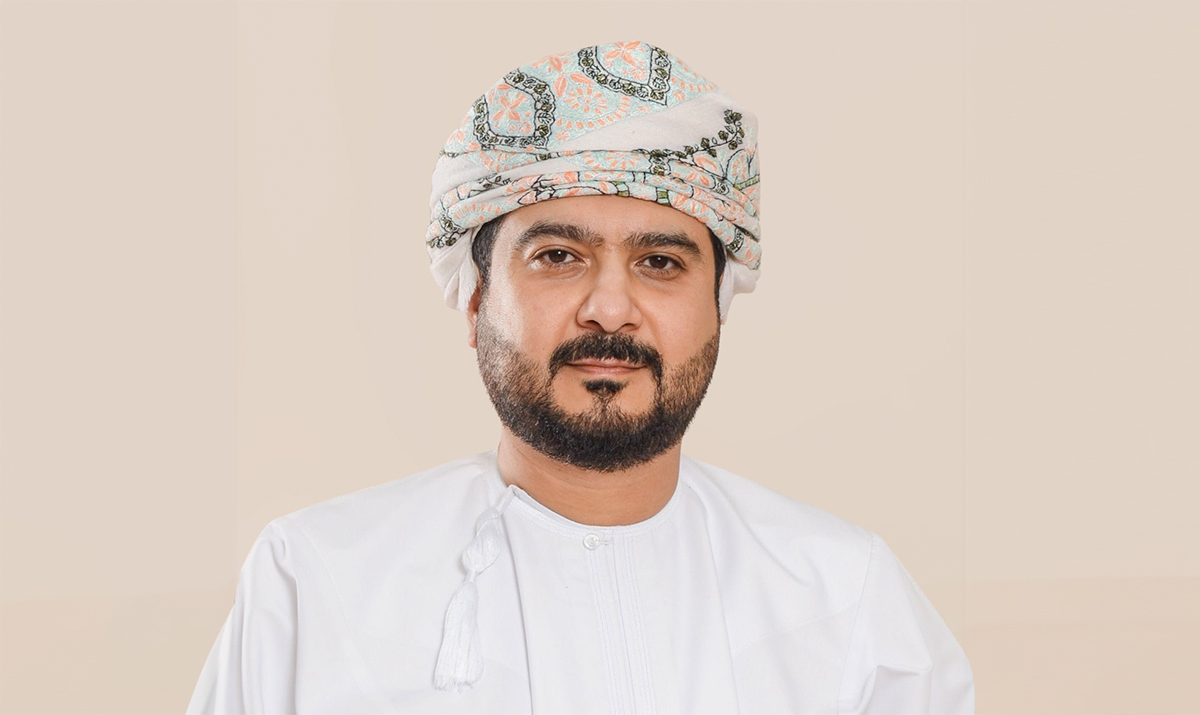
12 Feb Interview with Qais bin Mohammed Al Yousef, Former Minister of Commerce, Industry and Investment Promotion, Oman
Current forecasts suggest Oman’s gross domestic product expanded by 2.9% in 2025, with a 3.7% rise expected in 2026. What key factors lie behind Oman’s impressive economic performance?
Today, Oman’s economic growth is steady and increasingly broad-based. Oil revenues continue to provide stability, yet what excites me most is the momentum from manufacturing, logistics and construction tied to major projects. Importantly, inflation remains low, the rial is strong and, thanks to fiscal discipline, we have room to invest where it matters.
Foreign direct investment is another part of the story. By the end of quarter two 2025, FDI was up 12.8% compared with the same period in 2024, with oil and gas rising 17%, manufacturing 12.5% and construction 8.6%. US investment alone grew 21%. On top of this, in September 2025 S&P reaffirmed Oman’s investment grade sovereign credit rating at BBB- with a stable outlook. This is all at a time when trade tensions are holding back capital flows in other regions. This momentum and confidence in Oman reflect the strong and enlightened leadership of His Majesty Sultan Haitham bin Tariq and the clear direction set by our Oman Vision 2040 development strategy, which together are driving the country’s economic renewal.
While oil and gas still account for roughly 30% of GDP, Oman is pursuing industrial diversification through its Industrial Strategy 2040. How would you summarize this strategy and what industries is the country prioritizing to deliver the largest gains over the next decade?
In a nutshell, the strategy is all about building an economy that is productive, resilient and ready for the future. What we’re doing is putting real focus on skills, the adoption of new technology and competitive clusters. Our priority sectors include petrochemicals, metals, food and pharmaceuticals alongside emerging industries such as green hydrogen and renewables.
What I’d like to make clear is that diversification is being built from the bottom up. Small businesses are integral to our industrial vision and that’s reflected in the Omani Development Bank’s 65% increase in lending to small and medium-sized enterprises in 2024, supporting more than 1,700 businesses.
Oman awarded $9.7 billion in construction contracts in 2024. What flagship infrastructure projects are expected to bolster the country’s economic and manufacturing potential in the coming years?
There’s no doubt Duqm remains the anchor. Its refinery is already operating at 255,000 barrels per day and that sits within a much larger industrial and logistics hub. Then there’s the new Hafeet Rail line, Oman’s first direct rail access into Gulf markets. Linking Suhar to Abu Dhabi, it’ll deepen Oman’s integration into Gulf supply chains and cut freight times across the region for our exporters. And speaking of logistics, I should point out that Ports of Duqm, Suhar and Salalah are all expanding and inland dry ports are being developed.
Of course, renewable energy is a sector of huge potential. It’s advancing rapidly with two large solar plants at Manah — one led by EDF Renewables and Korea Western Power, the other by Sembcorp and Jinko Power. Alongside this is the Dhofar Wind Farm with Masdar. This backbone infrastructure and more besides all across Oman, is critical for manufacturing and it ties back to the diversification agenda I mentioned earlier.
What main export trends highlight the country’s diversification efforts?
Certainly, Oman’s exports today look very different from a decade ago. Crude and liquefied natural gas once dominated, now refined fuels, polymers, aluminum, fertilizers, food and machinery carry greater weight. Non-oil exports rose 11.3% between quarter 3 2024 and quarter 3 2025. That reflects our stronger industrial capacity and improved market access through our free zones, special economic zones, industrial estates and network of free trade agreements. Looking ahead, green hydrogen and ammonia will add a new layer of exports once production scales later this decade.
How has the Made in Oman initiative helped build local manufacturing and raise the global profile of Omani goods?
The Made in Oman campaign, launched over twenty years ago, is now a recognized mark of quality. Actually, it began as a buy-local initiative, encouraging people to choose Omani products. The local demand it created helped companies raise standards, expand production and ultimately compete abroad. You can see it clearly in food and agribusiness. It’s a $5 trillion global industry where Omani producers are steadily finding their place. What started as a campaign to boost domestic sales of Oman-made goods is now helping open doors in more than 130 export markets.
The Ministry of Commerce, Industry and Investment Promotion has recently launched measures such as the Golden Residency Program and Elite Companies Initiative to boost local activity and increase foreign engagement. What impact are these expected to have in meeting Vision 2040’s economic goals?
The ten-year residency gives investors and professionals the time to really settle, contribute and create long-term value. Skilled people bring ideas, capital and connections. They build teams and generate demand for local services. The Elite Companies Initiative, on the other hand, has been developed to ensure larger companies receive tailored support to grow and strengthen supply chains.
And we’re already seeing results of these measures. As I mentioned earlier, American investment into Oman rose by more than a fifth in the first half of 2025. Combined with Oman’s reputation for stability and reliability, not to mention its free trade agreement with the US, these initiatives position the country as a bridge between Gulf, Asian and American markets.
The ministry also continues to simplify commercial activity through digital tools. How has Oman’s push to digitalize state services improved the ease of doing business and what further advancements are expected in this area?
I’d say the biggest change has definitely been speed. Licenses and customs clearances that once took weeks can now be completed in minutes, often fully online. For companies, that means lower costs and greater confidence that Oman is serious about being an easy place to do business.
We have also introduced regulatory sandboxes in areas like fintech, telecoms and transport to allow new ideas to be tested safely before full-scale rollout. Building on this model, we’re now preparing to extend sandbox environments into artificial intelligence and advanced technologies so companies can trial innovations in real-world settings under a clear regulatory framework. This is part of our National Program for Artificial Intelligence and Advanced Digital Technologies, which is designed to make AI not just a tool for government but a driver of productivity across sectors.
The next steps will include paperless cross-border trade, smarter procurement systems and more open collaboration with the private sector. All of this ties directly into Oman Vision 2040’s goal of creating a digital economy that is fast, secure and ready for the next wave of global growth.
Oman is targeting 30% renewables in its electricity generation mix by 2030 and net-zero emissions by 2050. How is the sultanate’s green energy push reshaping the country’s industrial landscape and what major projects are helping to drive progress toward national sustainability targets?
I am delighted to say we’re already seeing results on the ground. In the first five months of 2025, solar and wind together supplied about 11.5% of Oman’s electricity, more than double the share at the end of last year. That clean energy powered nearly 90,000 households and reduced emissions by more than 600,000 metric tons on an annualized basis. These are early but important steps toward our 2030 target of 30% renewables, rising further to 60-70% by 2040 and ultimately 100% by 2050.
Our grid now includes the 50-megawatt Dhofar I Wind Farm, the 500-megawatt Ibri II Solar Plant and the Manah I and II projects that will add a combined 1,000 megawatts. Ibri III, another 500-megawatt solar plant, is also in development. In parallel, large green hydrogen and ammonia ventures in Duqm and Dhofar are moving forward with exports expected later this decade. We’ve set aside over 25,000 square miles of land for renewable projects — about 53 times the size of New York City — which gives you a sense of the scale of our ambition.
Industry is adapting alongside these developments. Companies in metals, cement and plastics are lowering energy use and recycling heat and water. Waste-to-value initiatives are gaining ground and practices such as reuse and recycling are steadily becoming part of everyday operations. For us, the energy transition is not only about cleaner power, it’s also about industries adapting and finding ways to compete in a low-carbon world.
FDI into Oman has risen nearly 20% over five years. How does the sultanate’s free trade agreement with the US position it as a prime gateway to the American market and what other advantages does the country offer to US investors?
The FTA gives Oman tariff-free access to the US provided rules of origin are met. That is a serious competitive edge at a time when tariffs are raising costs elsewhere. It strengthens Oman’s role as a natural entry point for companies looking to serve the Gulf and wider regional markets while maintaining seamless access to the US.
American firms already operating here benefit from a clear and predictable trade framework, a stable currency and strong legal protections. These factors, combined with Oman’s world-class ports and logistics infrastructure, create an environment where manufacturers and service providers can plan with confidence.
Companies see the value, though compliance will be key as environmental and reporting standards increasingly form part of trade rules worldwide. As such, we are helping investors meet these new expectations through transparent regulations and digitalized customs systems. And let me repeat, FDI was up 12.8% year-on-year at mid-2025 with US investment rising 21%.
Where do you see the most compelling investment opportunities for US partners within Oman’s evolving industrial ecosystem? What high-potential segments remain underexplored?
For me, green hydrogen and ammonia projects stand out, yet opportunities extend well beyond them. Downstream plastics, metals, mineral processing and logistics offer real potential. Digital infrastructure is growing quickly as state services move online. Healthcare, education and tourism are all high-potential areas, and I would say desalination and grid stability present interesting prospects.
Would you like to share a final message with the readers of USA Today about Oman?
We are building an economy that’s more diverse and more sustainable while staying open to international partners. For American businesses, the mix of stability and direct access to the growth centers of Africa and Asia makes Oman an excellent base for investment. We are also one of only two Gulf Cooperation Council countries with an FTA with the US. Add to that our modern ports, competitive free zones and major opportunities in green energy, and the case for choosing Oman becomes clear.
For companies thinking about where to establish a long-term Middle East presence, Oman offers both reliability and reach into some of the fastest-growing markets in the world. To sum up, I’d like to say that now is the right time to explore Oman’s rich new opportunities, to invest in Oman, set up a Middle East base here, to expand partnerships, extend knowledge sharing and diversify your participation in our robust and vibrant economy. Oman has so much to offer and there’s so much more to come.