
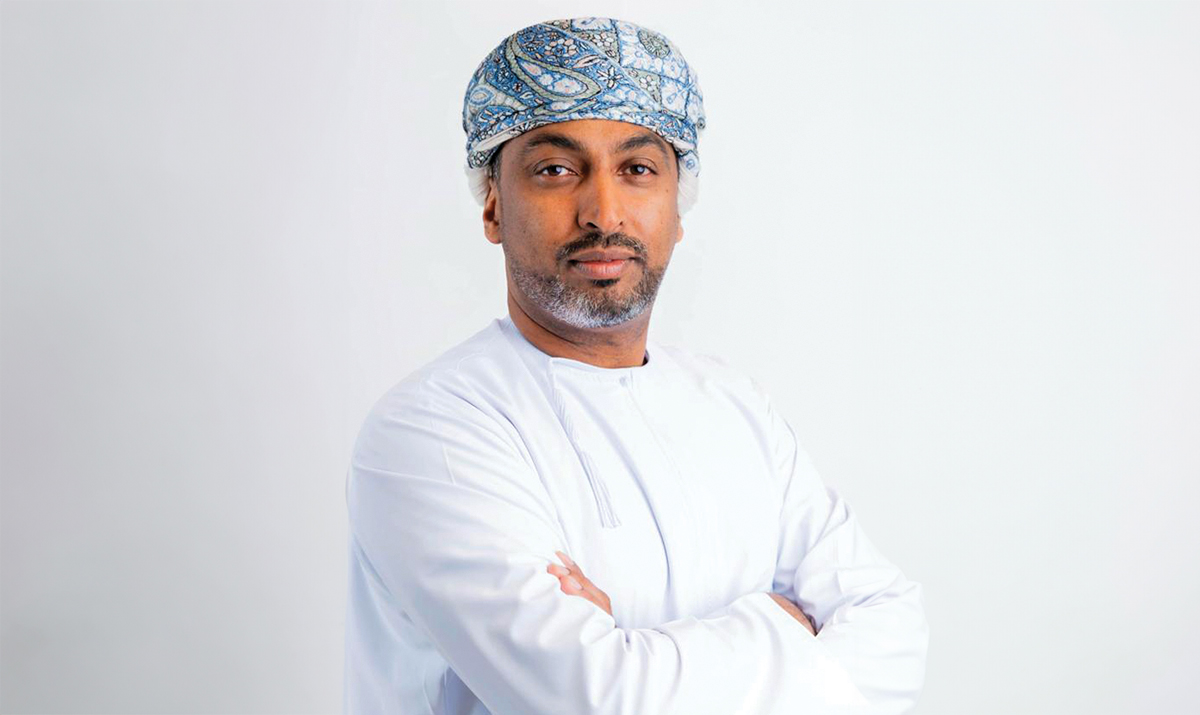
12 Feb Interview with Hamed Naamany, CEO of Oman LNG
Oman’s natural gas production is projected to reach 43 bcm by 2050, according to the Gas Exporting Countries Forum, and the sultanate is expanding its natural liquefied gas output through strategic developments, including upgrades at Oman LNG and the creation of the Middle East’s first marine LNG bunkering facility. How critical is Oman LNG to the country’s economy and diversification agenda?
Oman LNG is one of the most successful examples of diversification from an oil economy toward gas-driven growth in the Sultanate of Oman. We’re playing a central role in attracting investment and expanding trade by exporting one of the country’s most valuable assets — energy. In parallel, OmanLNG remains a cornerstone of the national economy and is closely aligned with Oman Vision 2040, contributing both to gross domestic product growth and to the wellbeing of surrounding communities. Through our business and presence, we also support other industries in achieving the vision’s key pillars, including social development, governance, emissions management and corporate responsibility. Oman LNG will continue to be vital to the economy and the state budget through 2040 and beyond.
How is Oman’s upstream oil and gas sector responding to worldwide demand for LNG?
We are in the era of gas. Global gas demand continues to grow, and Oman is well positioned to benefit thanks to our favorable geography and advancing technology that now makes the nation’s untapped reserves economically viable. This is the right time to unlock new opportunities and strengthen Oman’s role in global energy markets. Our focus is not only on LNG’s environmental advantages, but also on competitiveness and value creation. We approach the market not as a commodity trader, but as a strategic partner — building long-term relationships and attracting investors who see Oman as a strong, stable destination.
Oman LNG was established in 1994 and brought the nation’s first LNG facility online in 2000. It has since undergone multiple expansions to meet both surging global and domestic demand. How has the company shaped the evolution of Oman’s gas market and positioned itself as a frontrunner in domestic resource development?
Oman LNG has celebrated 30 years, yet our plant is still young compared to others that have operated for 40 or 50 years. We are in our prime — investing in technology to keep our assets at peak performance, expand capacity, enhance reliability and safety, and significantly reduce greenhouse gas emissions. This makes us a very attractive player in the global market. Recently, we signed over 15 new agreements with partners across 10 countries, including European nations, Turkey, China, Thailand and Japan — our key markets. These deals go beyond LNG supply; they strengthen partnerships and invite investors to grow their portfolios in Oman.
We have also integrated across the value chain, collaborating with Asyad on shipping and upstream partners on gas supply to offer a complete, agile energy solution to buyers. Looking ahead, we are now marketing our 2030 LNG volumes for the next decade. We see great complementarity with US producers, as we are positioned on opposite sides of the globe, between the world’s largest markets. By working together through swaps and partnerships, we can deliver greater value, efficiency and help accelerate the global transition from coal to cleaner energy.
Could you provide a brief overview of Oman LNG’s current capacities and how that compares with other regional LNG producers?
Our plant was originally designed for 9.9 million tons per year, upgraded to 11.4 million and last year we delivered 12 million tons — with room to grow further. Regionally, we are the second-largest LNG producer after QatarEnergy, and globally we rank around seventh or eighth. With our planned expansion, we will move into the top six or seven.
However, our strength isn’t about our size — it is about how we operate. Unlike larger producers, we focus on flexibility, low carbon footprint, strategic location and strong investment partnerships. These factors create greater value for our customers and make us highly competitive. The market recognizes this — we are able to close deals faster and more efficiently than others. In the end, buyers care less about where their LNG comes from and more about the quality and terms of the agreement, and that is where Oman LNG truly stands out.
What share of Oman LNG’s output serves domestic demand vs the global market?
All our LNG production is destined for international export. About 85% is sold through mid- and long-term contracts of up to 10 years — around 45% goes to Europe, 25% to Japan and the rest across markets from Turkey to China and Thailand. The remaining 15% is sold on the spot market. We don’t supply the local bunkering market; that will be handled by our colleagues at Marsa LNG. Our focus is outward — we have even reached markets as far as Puerto Rico, showing the global demand for and flexibility of Oman LNG.
We have delivered over 3,500 LNG cargoes overall, and reaching our 1,000th delivery to Japan — a founding customer and our largest single-country market — was a special milestone last year. While Europe is becoming our biggest regional market, Japan has remained a key partner for decades. This milestone reflects the strength of our long-term relationships. Every cargo requires significant effort and celebrating these achievements shows the trust and goodwill built over 30 years. We hope to see similar milestones with other markets, from Turkey to India and Spain, where Oman LNG has also created lasting partnerships.
Oman LNG is a leader in terms of promoting local content, the “Omanization” of its workforce and innovation. How would you describe the strength of Oman’s energy talent pipeline and what role does Oman LNG play in developing future-ready skills?
Oman has developed strong talent in the energy sector over the past 50 years, with capable professionals across the industry. For us, the priority is nurturing innovative and competitive talent. We mainly recruit fresh graduates and develop them — whether they stay with us or move elsewhere, they contribute to Oman’s overall progress. We also invest heavily in our supply chain to build local capabilities. Managing around 40% of the country’s gas, it is our duty to give back through local content and in-country value. This creates a secondary economy and strengthens communities. At Oman LNG, people development and local value creation are key performance areas — just as important as safety, revenue and cost competitiveness.
How is Oman LNG engaging local small and medium-sized enterprises in its supply chain?
We actively support both established and new SMEs. For established ones, our role is to connect them with opportunities. For new SMEs, we focus on building their capabilities so they can serve the industry effectively. We require SME participation in our contracts — either as contractors or subcontractors — and working closely with Oman’s SME Authority helps ensure we attract capable partners and create real local value as well. We also invest in developing new SMEs to encourage competition and innovation. It is a win-win — SMEs often deliver efficiently, share risk and help grow the secondary economy around us. Our only strict requirements are on safety, governance and ethics, and, so far, our collaborations with SMEs have been very successful.
Oman LNG is a recognized leader in decarbonization. In 2024, it received the United Nations Environment Program’s Golden Path award for methane reduction, for example. How important is sustainability to the company?
Gas is one of the most efficient energy sources — but only if it is managed responsibly. It is excellent for offsetting coal, although its release of methane is highly damaging to the environment. That is why, for Oman, minimizing emissions and converting every molecule into useful energy is both an economic and environmental priority. We have built this commitment into our shareholder agreements, ensuring continuous investment in emission reduction.
Our goal is to achieve the Oil and Gas Methane Partnership 2.0’s Level 5 certification — the highest standard for methane management — in 2026, making Oman LNG among the first in the region and few globally to reach it. This certification will assure our partners that they are sourcing LNG from a producer with top-tier environmental performance.
Today, we are already in the top quartile globally, with emissions at under 0.25 tons of carbon dioxide per ton of LNG, and we aim to go even lower by leveraging Oman’s increasingly efficient and green power grid. We will be announcing major progress on this later this year.
The company also invests in corporate social responsibility programs through the Oman LNG Development Foundation. How does the foundation contribute to community empowerment and social progress across the country?
For over 20 years, we have dedicated 1.5% of our revenue to CSR. We evaluate every project for social return on investment, ensuring community impact. What many people don’t know is that we have developed our Oman LNG Development Foundation’s fund as a self-sustaining CSR foundation. It invests globally to generate returns, ensuring the fund can continue perpetually, even without future contributions from Oman LNG. Our pride is that a recent restructuring of the fund means it can now grow independently, creating a lasting legacy beyond our company. Our hope is that this model inspires others in Oman and globally to build sustainable, long-term CSR programs.
Since taking on the CEO role in 2021, you’ve guided Oman LNG through record achievements, including a 98.23% efficiency rate, long-term contracts totaling 10.4 million tons annually and strong advances in ESG leadership. What are your priorities today?
We don’t focus on breaking records; we focus on results. Currently, our priorities are twofold: first, maximize energy efficiency by leveraging the Omani power grid and making incremental investments to grow our assets cost-effectively. Second, strengthen Oman LNG’s role in supporting Oman Vision 2040 — attracting international partners, generating revenue and being a strong corporate citizen through ESG initiatives. Looking specifically at 2026, these two goals are critical. Beyond 2026, our focus shifts to securing contractual commitments for 2030 and exploring partnerships, particularly with US producers, to optimize market access and create mutual value.
What downstream projects present the best opportunities for US investors seeking to enter Oman’s gas market?
Oman is open for business. The government welcomes investment, and international players, including major US energy companies, are recognizing our potential and coming here. While LNG is important, there is also a huge opportunity to leverage US expertise in tight and shale gas to unlock even more of Oman’s resources. The sultanate is active in gas technology and innovation, and combining local and international knowledge in these areas creates significant value. I encourage companies to visit Oman and explore partnerships — seeing the opportunities firsthand is the best way to understand the potential.
How open is Oman LNG to new international collaborations, particularly with US companies?
The global LNG industry is highly interconnected, with producers building strong networks and partnerships. We see opportunities to leverage trade indices, geographic positioning, market swaps and mutual support in times of disruption, such as hurricanes. Success comes from understanding each other’s needs and finding ways to collaborate effectively.
In terms of making new connections with US LNG producers specifically, our approach is to leverage Oman’s untapped potential alongside the US’s abundant resources, creating opportunities to access markets together. This collaboration is about combining strengths rather than competing. Shipping times illustrate the potential efficiency: American LNG may take 25–28 days to reach certain markets, while Oman can deliver to the same places in just a few days. It is the same product, but proximity and coordination create real value. I am open to discussions with anyone interested in LNG volumes.