
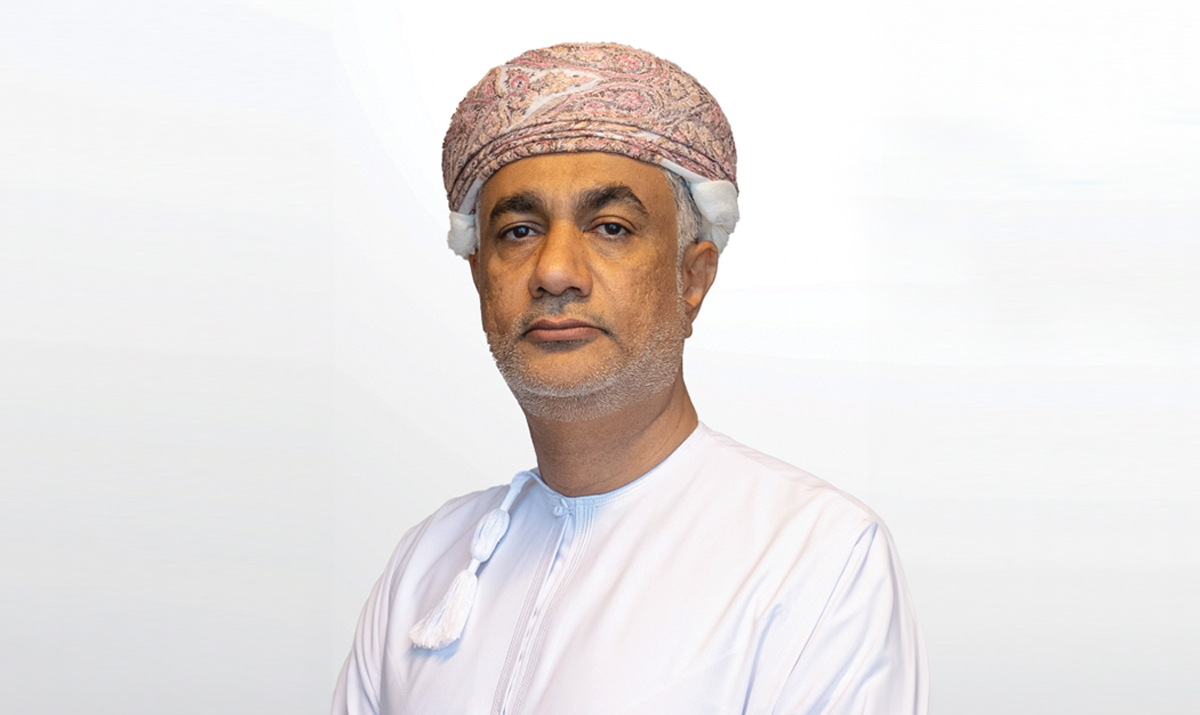
12 Feb Interview with Ahmed Al Amry, CEO of Oman Airports
Oman is rapidly positioning itself as a rising hub for aviation and tourism in the region. Revenues at the nation’s airports jumped 17% in 2024, while its hospitality sector has also shown strong growth. From your perspective, what is the sultanate’s competitive advantage as an aviation gateway, and how significant is the aviation sector within the Oman Vision 2040 strategy?
Oman’s advantage lies in the convergence of multiple strengths, each reinforcing the other. At the national level, the government has placed tourism and aviation at the heart of Oman Vision 2040, recognizing these sectors as critical drivers of diversification and economic resilience. Oman Airports serves as an enabler of this vision by providing world-class infrastructure, operational excellence and services that connect the sultanate to global markets.
Our competitive edge in tourism stems from Oman’s unique geographical location at the crossroads of Asia, the Middle East and Africa, combined with the authenticity of our cultural and natural offerings. Few destinations in the world can boast such diversity — majestic mountains, pristine beaches, vast deserts and a living heritage — all within short reach of modern airport infrastructure.
In 2019, Oman Airports welcomed over 16 million passengers. Despite the global challenges of the pandemic, we have surpassed pre-COVID levels in international and domestic point-to-point traffic. While transfer traffic remains below pre-pandemic levels due to Oman Air’s reduced fleet, our strategic focus on expanding direct routes is bridging that gap. We are confident that by the end of next year, we will restore and even exceed previous levels of transfer traffic. This progress illustrates the resilience of our sector and its central role in realizing the national vision.
Oman Airports oversees Muscat, Salalah, Duqm, and Sohar airports, and recently signed a cooperation agreement with Singapore’s Changi Airport Group. Could you share an overview of the company’s assets and its strategic role in shaping the country’s aviation landscape?
Airports are not simply transport hubs; they are national ambassadors. They represent the first and last impression of a country and, at Oman Airports, we take this responsibility very seriously. Our mission is to ensure that every traveler passing through our facilities experiences the warmth of Omani hospitality, the efficiency of world-class operations and the excellence of modern infrastructure.
Our partnership with Changi Airport Group, one of the world’s most respected operators, reflects our focus on growth and excellence. Together, we are working on strategies to strengthen both aeronautical and non-aeronautical revenues. We see non-aeronautical income as an area with huge potential for innovation, whether through retail, real estate or hospitality. By growing these areas, we reduce dependence on airline charges and create a more attractive environment for carriers to expand their presence in Oman.
It is also vital to highlight that Oman Airports is not a standalone entity. We are part of a much broader ecosystem that includes airlines, tourism operators, hotels and logistics providers. Together, we contribute to the sultanate’s economic diversification, tourism promotion and global positioning as a hub of opportunity.
What is your long-term plan to scale growth across Oman’s airports?
We are carrying out a broad development program across our airports. At Muscat International, one of the key projects is the redesign of the central duty-free area. The aim is to give passengers a stronger sense of place and make the retail journey more engaging. Alongside that, we are creating additional food and beverage spaces to reflect changing travel habits and the growing demand for richer food concepts. The plan also includes new international brands, a dedicated ‘Omani Corner’ with local favorites like halwa, breads and coffee, and relocating the arrivals duty-free so it can be accessed by domestic passengers as well.
Beyond the passenger experience, our aeronautical priorities focus on route expansion. China is a primary target market, alongside Central and Eastern European countries such as Poland, Hungary, Bulgaria and Spain, where there is strong tourism potential currently for charter and seasonal operations. These markets are key to diversifying Oman’s inbound tourism base. In 2025, we achieved a major milestone by attracting China Eastern Airlines, launching two weekly flights starting end of November from Beijing to Muscat, and securing an expansion to daily Shanghai–Muscat flights starting at the beginning of 2026.
Oman Airports continues to work closely with its stakeholders including the Ministry of Tourism to pursue strategic goals that promote Oman as a year-round destination. This includes strengthening our presence in key source markets through coordinated marketing initiatives, joint airline engagement and strategic tourism partnerships. Our objective is not only to sustain existing demand but also to unlock new opportunities, positioning Oman as a competitive and attractive hub for international travelers.
We are also launching several investment-driven initiatives. One significant project is the creation of our own fueling company, which will give us more control over pricing and allow us to use fuel incentives strategically to attract airlines. Another is the development of a dedicated fixed base operator terminal to serve VIP and private passengers at the highest standards.
As part of Oman’s vision to become a global logistics hub, Muscat International Airport and Salalah Airport are playing a pivotal role in strengthening air cargo capacity, connecting local industries to international markets and enhancing the country’s trade competitiveness. The state-of-the-art cargo facilities of Muscat and Salalah launched in 2018 can handle a wide range of goods, from general cargo to temperature-sensitive pharmaceuticals, perishables, dangerous goods, live animals and high-value shipments. They are equipped with modern warehousing, automated handling systems and cold-chain solutions that meet international standards.
In Muscat, the cargo facility handled around 169,000 tons in 2024, compared to more than 200,000 tons before COVID. Our target is not only to recover but to exceed those levels. Oman is the second-largest fish producer in the Arab world after Morocco, yet less than 2% of this output is exported by air. We are, therefore, working on establishing a state-of-the-art seafood export logistics and processing center at Muscat International Airport to process, package and deliver fresh fish and sea food products to markets in Europe and Asia within just 37 hours — an initiative that will both increase cargo volumes and add value to Omani exports.
Salalah Airport has carved a unique position in Oman’s logistics landscape by leveraging its proximity to the Port of Salalah, one of the busiest transshipment hubs in the region. This “sea-air” advantage allows for faster cargo movement by integrating maritime and air transport, offering competitive transit times for global shippers.
Furthermore, we are exploring the creation of a national loyalty program, in partnership with a local bank, to allow the 15 million passengers who pass through our airports annually to earn and redeem points across multiple merchants, positioning the airport itself as a hub of economic and lifestyle activity.
Our ambitions also extend internationally. We are pursuing opportunities to operate and manage airports abroad, building on our expertise and success in Oman. Our ongoing involvement in the Karbala Airport project in Iraq is an example of how we are exporting our knowledge and capabilities to contribute to regional aviation development.
Oman Airports is also planning to develop three airport cities. Can you introduce these groundbreaking initiatives?
In terms of its efforts to increase non-aeronautical revenues, Oman Airports has developed real estate master plans for Muscat International Airport, Sohar and Salalah. These airport cities aim at leveraging the airports and upcoming expansion to stimulate development and promote related business opportunities that will attract inward investment to the sultanate, support diversification of the economy, enhance both regional and international business and tourism, and be a seedbed for new enterprises for Omani employment.
Muscat Airport City spans over 34 million square feet directly adjacent to Muscat International Airport. It will be a world-class destination integrating aviation, logistics, commerce, lifestyle and innovation into one dynamic ecosystem. During 2025, Oman Airports successfully attracted significant foreign direct investment to Muscat International Airport, particularly in the logistics gate adjacent to the cargo building. The company signed six major investment projects with a combined FDI of approximately $95 million and a total leasing area of over 860,000 square feet in various properties around the airport.
To absorb this demand, Oman Airports has expanded the infrastructure development for phase 2 of the logistics gate with a total investment capex on infrastructure of around $4.2 million. This expansion brings an additional 720,000 square feet of land to the airport’s logistics cluster that aims to accommodate future logistics requirements.
To further unlock the commercial potential of Salalah and Sohar airports’ lands, Oman Airports has recently completed the feasibility study and detailed master plan for airport cities at both these airports. The real estate lands provide various investment opportunities for different business segments. Salalah Airport City is a landmark development project spanning a total area of 41 million square feet, with phased development planned in 2026, the project is designed to position Salalah as the southern hub for logistics, tourism and services, complementing the economic roles of Muscat and Sohar.
Sohar Airport City, on the other hand, is a landmark national project aimed at transforming the area surrounding Sohar International Airport into a dynamic, multipurpose economic hub over the next 30 years, starting from 2026. Covering a total area of 97 million square feet, the development aligns closely with Oman Vision 2040 and represents a key pillar in strengthening Sohar’s role as a strategic gateway in northern Oman.
Together, Oman’s Airport Cities form a powerful network of opportunities — hubs where people can live, work, invest and connect on a global scale.
Innovation and “Omanization” are central to Oman Airports’ strategy. How are you supporting startups and local talent?
The Runway Innovation Lab, launched in 2023, is Oman Airports’ platform to drive aviation innovation and collaboration. We focus on three main segments: empowering our employees to innovate, supporting startups and engaging academia and digital partners in solving real aviation challenges. Through programs such as our Incubation Program, research and development pilots and proof-of-concepts, plus innovation-culture initiatives like hackathons and talks, the lab has already incubated seven startups in its first cohort, launched multiple advanced pilots including a digital twin and apron artificial intelligence (AI), and signed strategic partnerships with leading digital players.
At the same time, we have accelerated our Omanization program, recruiting over 350 Omani nationals in 2024 alone. These professionals are taking on technical, operational and service roles across our airports, ensuring that our growth is not only sustainable but also inclusive, empowering young Omanis to be active contributors to the aviation sector’s future.
A digital transformation program launched in 2024 is reshaping airport operations nationwide. How is technology helping Oman Airports remain globally competitive?
“Technology is no longer just an enabler — it is the backbone of modern airport operations. Our digital transformation program is embedding smart systems across every facility to drive efficiency, safety and service excellence. A flagship initiative is the Single Token Journey (STJ), which replaces traditional boarding and immigration checks with biometric facial recognition. Passengers will soon be able to scan their passports and boarding passes remotely, drop their bags at self-service counters and move seamlessly through security and immigration without repeated document checks.
We are implementing 29 STJ touchpoints at Muscat International Airport in partnership with Oman Air and, most importantly, in close collaboration with government authorities and border security entities. This ensures end-to-end integration across every checkpoint, balancing convenience with the highest levels of security. A major benefit is the automatic creation of the passenger’s digital identity token once they check in. From that point onward, they no longer need to present or scan any physical documents — the biometric token becomes their single key to move through every stage of the journey.
Beyond passenger processing, we are integrating AI-driven crowd management, predictive analytics and centralized operational dashboards to give our teams real-time visibility and decision support. Together, these initiatives will dramatically enhance efficiency, reduce congestion and elevate the overall passenger journey, positioning Oman Airports among the most technologically advanced operators in the region.
Another illustration concerns Oman Airports’ Records Management Centre, the first of its kind in the sultanate and distinguished by its integrated design and operational efficiency, while adhering to the highest technical standards that ensure the security, integrity and proper management of records in line with global best practices. The launch of the “Sahab” Electronic Documents and Records Management System represents a strategic pillar in the company’s digital transformation journey, enhancing institutional efficiency through accurate information integration and seamless retrieval, thereby supporting timely decision-making and reinforcing organizational reliability.
Sustainability is a global imperative. How is Oman Airports advancing the green agenda?
Sustainability is not a side project — it is a central pillar of our strategy. Our goal is to transition to near-full green energy by 2027. At Salalah Airport, we are finalizing plans for a solar power facility to generate 5 megawatts, covering the airport’s entire demand. At Sohar Airport, we are preparing a larger solar project with a capacity of 150-200 megawatts, far exceeding our needs and enabling us to sell surplus power to the grid.
In parallel, we are electrifying our ground operations. Today, we operate 309 electric vehicles across our airports and, with Oman Air’s fleet, the total will soon exceed 350. We are rolling out charging infrastructure for both staff and passengers, with plans for all airport taxis to be electric by 2027.
Water sustainability is another priority. We are investing in reverse osmosis plants to produce our own supply, covering daily consumption of up to 1.85 million gallons, while also reducing costs and ensuring resilience in case of supply disruptions.
Alongside these initiatives, we have also started operating a fleet of green hydrogen vehicles. We built an end-to-end setup to support their use, ensuring they meet our own operational needs while also opening opportunities for commercial deployment. By embedding these initiatives into our operations, we aim not only to reduce our carbon footprint but also to position Oman as a regional leader in sustainable aviation.
What concise message would you like to send to USA Today readers about the company and the country?
Oman Airports is more than an operator; it is a catalyst for national progress. Our airports are gateways of opportunity, connecting Oman to the world and the world to Oman. With cutting-edge infrastructure, ambitious sustainability plans and a clear focus on innovation, we are determined to make Oman a preferred destination for travelers, investors and airlines alike. To USA Today readers, I would say: Oman is ready. Ready to welcome you with unmatched hospitality, ready to partner with you in aviation and beyond, and ready to showcase the beauty, culture and opportunities that make our country unique.