
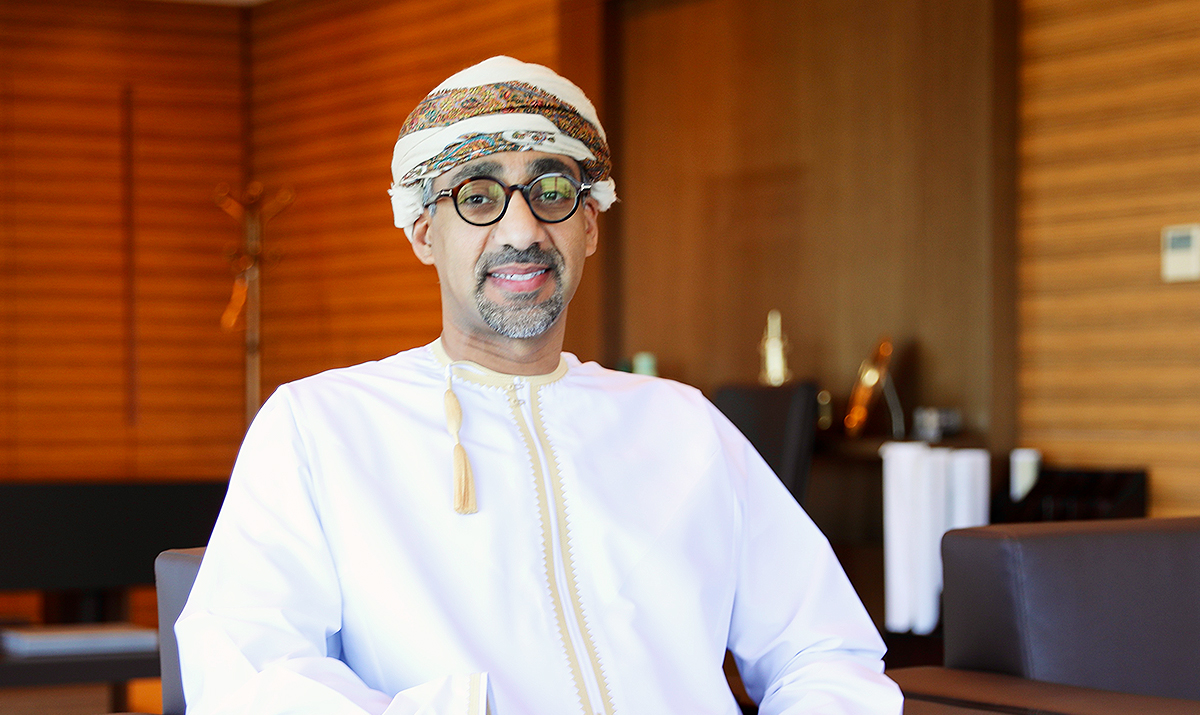
12 Feb Interview With Moataz Al Riyami, Managing Director, CC Energy Development (CCED), Oman
Oman’s oil and gas industry remains a cornerstone of the national economy, accounting for about 30% of gross domestic product and 70% of government revenues. In recent years, reforms promoting privatization, public investment and diversification have been reshaping the sector’s role under Oman Vision 2040 development plan. How has the role of the country’s hydrocarbon industry evolved since the launch of the vision in 2020?
With Vision 2040, Oman has shifted its strategy, highlighted by the release of its net-zero roadmap and the goal of achieving zero emissions by 2050. We are fortunate in Oman to have diverse energy resources, both traditional hydrocarbons and emerging renewables — the country is blessed with some of the best solar resources worldwide, as well as the southern coast’s wind energy potential.
Today, Oman is creating opportunities across all three energy fronts. At CC Energy Development (CCED), we aim to be a responsible operator in conventional energy while embedding sustainability and innovation into every project. Our approach is simple: performance delivered efficiently and responsibly.
Can you describe the operating environment for exploration and production companies in the sultanate?
Oman offers a stable and transparent regulatory framework, shaped through active consultation with operators. The fiscal regime is consistent and predictable, making Oman a dependable investment destination. Supported by Oman Energy Association, the sector has achieved strong standardization across health, safety and environment criteria and worker welfare, ensuring consistency in operator alignment. This drives efficiency and builds collective resilience within the industry.
Having established itself in the country in 2007, CCED has gone on to become one of Oman’s largest upstream oil and gas operators, powered by sustained exploration, multi-phase field development, technology-driven operations, and strong “Omanization” policies. Can you provide USA Today readers with an overview of CCED’s current assets and production performance?
Since starting operations in 2010, we have produced over 150 million barrels of oil, averaging around 25,000 barrels per day in 2025. Our core assets are Blocks 3 and 4, where we have completed more than 4,400 square miles of 3D seismic coverage and drilled 52 new wells in 2024 alone. Recently, we were awarded two new exploration blocks, 38 and 74, expanding our footprint and future potential. Over the next five years, we plan to drill 17 exploration wells. It is an exciting time for CCED as we continue to strengthen our resource base and operational performance.
Blocks 38 and 74 are in the very early stages of exploration, with limited historical activity dating as far back as the 1960s. Our immediate focus is on consolidating existing data and launching new seismic acquisition across the acreage. Within the next two years, we aim to complete the seismic work and define prospects for initial exploration wells. We see significant untapped potential and are approaching it with precision and discipline.
How is CCED integrating innovative technologies such as big data, cloud computing, artificial intelligence (AI) and robotics into its operations, and what impact are these types of technology having?
AI, and generative AI in particular, will redefine all aspects of operations across our industry, from safety through to predictive maintenance. CCED has begun deploying our first AI-enabled field projects focused on real-time data analysis and production optimization — the potential impact is enormous.
Our focus is on maximizing reservoir recovery and operational efficiency. We are deploying the latest digital and technology solutions for field development, and we are excited about the potential of generative AI to further unlock value. We have already identified “lighthouse” projects for AI applications. Another example of our innovation is our flagship gas-to-power project, which replaces diesel with untreated flare gas, a complex but impactful technology.
CCED places talent development at the core of its operations. It supports education and upskilling initiatives, while its vendor development program and Tawreed Portal help drive the advancement of small and medium-sized enterprises. How would you assess the strength of Oman’s oil and gas talent?
Oman has no shortage of technical talent, from geologists to engineers, with experience in some of the country’s most complex reservoirs, including the use of enhanced oil recovery methods. CCED benefits from this wealth of local talent, with 92% “Omanization” at all levels. That talent extends to contractors as well, combining international service providers with younger Omani SMEs, creating a competitive environment for operators with access to all necessary technologies and solutions.
CCED maintains a steady talent pipeline by hiring graduates annually, ensuring a sustainable workforce. We also collaborate with local universities, such as Muscat University, on innovative projects, including AI initiatives.
CCED remains committed to environmental leadership, targeting a 30% reduction in greenhouse gas emissions and zero routine flaring. The company’s gas-to-power partnership with clean-energy specialist Aggreko is central to its decarbonization strategy, alongside solar deployment, wastewater recycling and other environmental, societal and governance initiatives. What concrete actions has CCED taken to reduce emissions and align with Oman’s net-zero-by-2050 goal?
I believe strong environmental performance is both a responsibility and good business. Our gas-to-power project with Aggreko displaces diesel with flare gas, abating around 70,000 tons of carbon dioxide per year and powering 15 megawatts on-site, about 60% of our wells. It is the largest project of its kind in Oman, setting a regional standard.
We are also advancing water management, recycling and safe disposal practices, and are on track to meet our net-zero goal of a 30% reduction by 2030. We have a strong portfolio of annual ESG projects focused within our concession. Over the years, for example, we have supported local commerce and fostered SME development. CCED has proudly been a positive and supportive neighbor in the region.
CCED maintains international partnerships with firms such as Mitsui E&P Middle East and Sweden’s Tethys Oil, and is actively seeking new collaborations — particularly with US investors in drilling, enhanced oil recovery, digital transformation and sustainability. How has CCED’s collaboration with global partners helped strengthen its technical and operational performance?
CCED benefits from our parent company, CCC Group, the Middle East’s largest engineering and construction enterprise that has a strong US presence, giving us access to advanced technology and engineering expertise. Locally, we partner with major oilfield service providers, ensuring access to the latest solutions in Oman’s competitive oil and gas sector.
What opportunities exist in Oman’s energy sector for US investors, and why is now the ideal time to engage?
There is significant untapped potential in technology, especially AI and emerging technologies like drones, which are set to transform the oil and gas sector. As I mentioned, Oman offers a stable fiscal environment and a secure business landscape, with strong respect for contracts and very supportive ministries — the regulatory framework balances structure with opportunity. Oman is an untapped market, and Vision 2040 opens a wealth of opportunities for investment, collaboration and partnerships in both traditional and new energy.
You became managing director of CCED in April 2025 after more than two decades in Oman’s energy sector, including senior positions at Petroleum Development Oman and Shell. You are now leading CCED through an exciting new growth phase following the company’s acquisition of new exploration assets. What are your priorities as managing director?
At CCED, our priority is disciplined, sustainable growth. Above all, we aspire to remain Oman’s operator of choice — efficient, low-cost and fully committed to supporting the country’s energy transition, as reflected in our recent award of two new blocks.